Hongmen heritage · Tradition, memory & the historical record
Five Ancestors.
One Enduring
Brotherhood.
少林五祖・洪門精神
A story of survival, an oath of solidarity, and a heritage carried across oceans. Explore the Five Shaolin Ancestors in Hongmen tradition—and what that legacy means for San Francisco’s Chee Kung Tong.
蔡德忠Cai DezhongFirst ancestor · 長房
方大洪Fang DahongSecond ancestor · 二房
馬超興Ma ChaoxingThird ancestor · 三房
胡德帝Hu DediFourth ancestor · 四房
李式開Li ShikaiFifth ancestor · 五房
The five names above belong to Hongmen’s ancestral tradition. Their individual lives are not established biographies. [6]
At the heart of our lodge · 五祖聖像
The Five Ancestors
in our San Francisco home.
The illustration displayed at the central altar of our San Francisco headquarters depicts the Five Ancestors. It gives this ancestral tradition a visible place in the life of our lodge, connecting the story we inherit with the community we gather today.
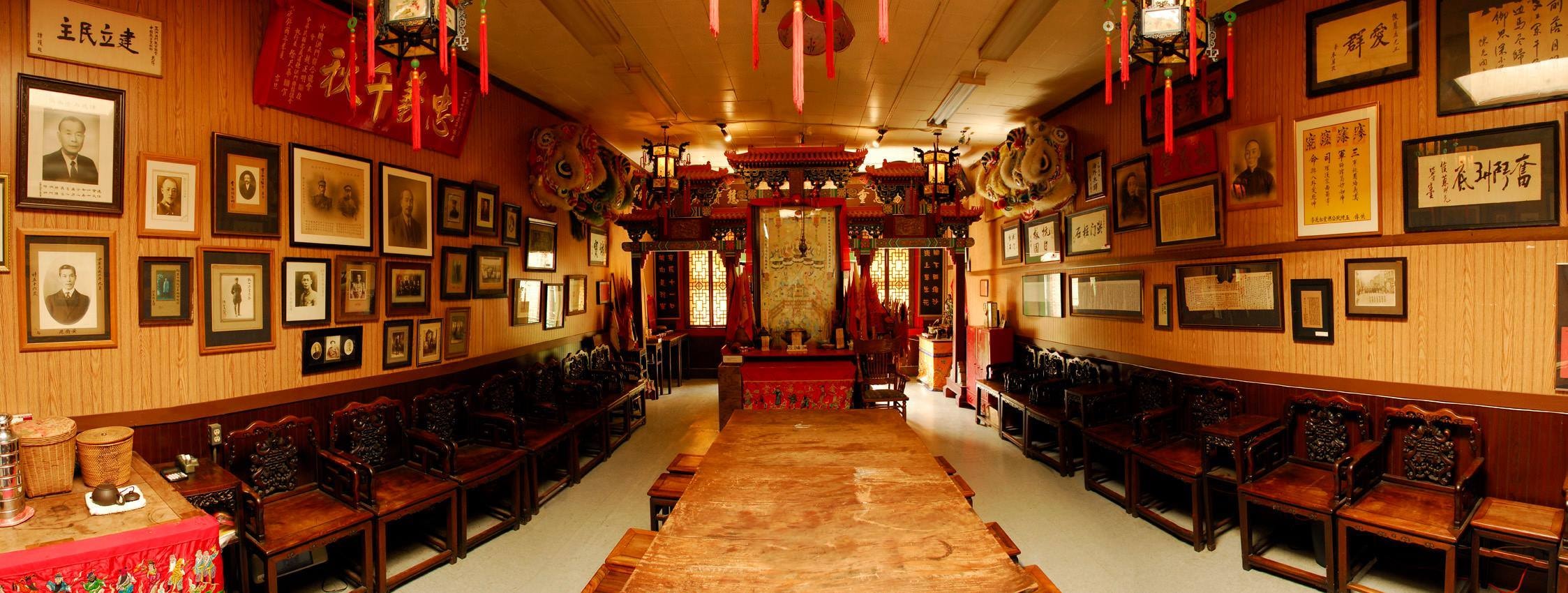
舊金山致公總堂中央祭壇上的五祖聖像,承載洪門的祖源記憶與精神傳承,與今日總堂的團結及社群服務相連。
The story handed down · 五祖傳說
From the ruins,
a brotherhood remembered.
The Five Ancestors are remembered as founders in Hongmen tradition. The Shaolin escape narrative is a founding legend, with versions that differ. It is not a verified account of five monks establishing the San Francisco lodge.
A monastery, a betrayal, five survivors
In versions of the Xi Lu narrative, Shaolin monks assist the imperial court, then suffer persecution and the destruction of their monastery. Five survivors escape and become the ancestral figures around whom a new brotherhood takes shape. The story turns loss into a promise of mutual loyalty. [5]
The white censer
The National Museum of Singapore recounts an episode in which the fleeing monks discover a white incense burner in a river. Its inscription calls for the overthrow of the Qing and restoration of the Ming. They interpret it as a heavenly sign and swear an oath. The three-legged censer later symbolizes heaven, earth and humanity in society ritual. [1]
A shared name, many communities
The five ancestors give the tradition a language of common origins. Different lodges could see themselves as branches of a larger family. The significance lies in the bond the story expresses: people separated by place can still recognize an obligation to one another.
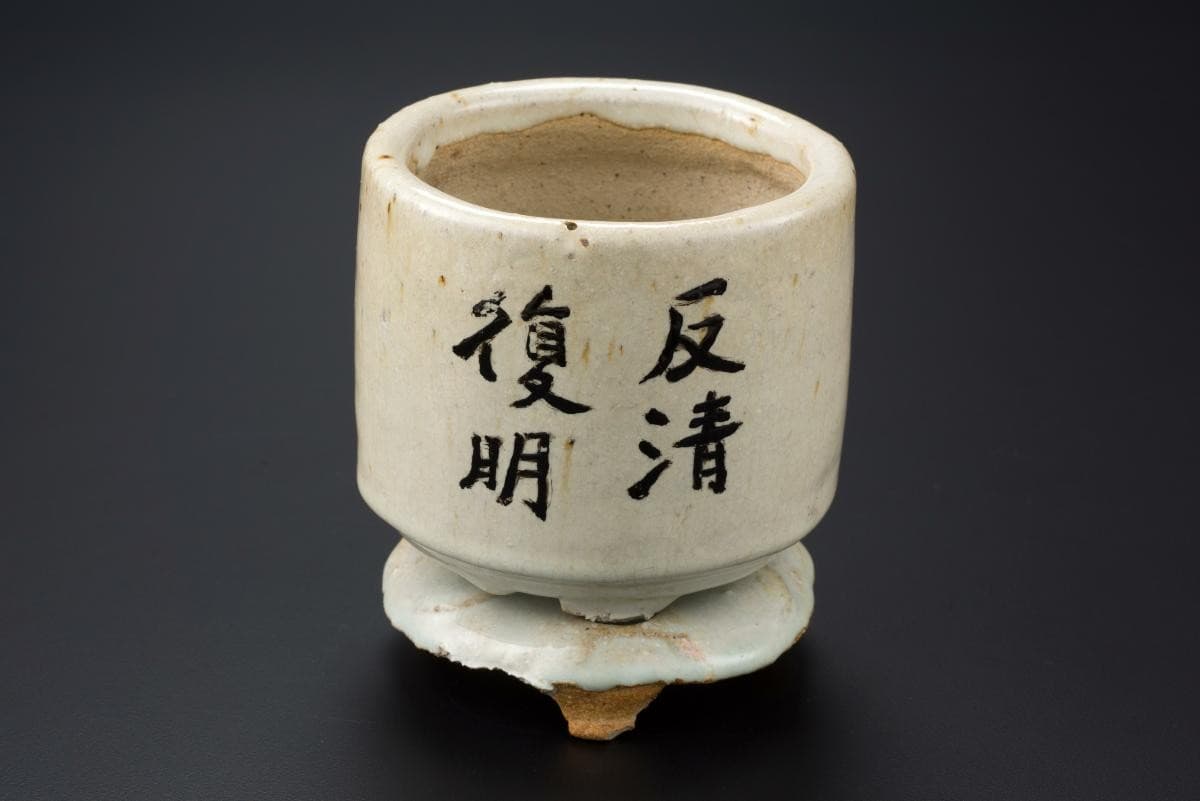
Collection: National Museum of Singapore / National Heritage Board. [1]
洪門傳說中的少林五祖,象徵患難中的團結與守信。五祖逃離少林、結義立誓的故事,屬於流傳已久的祖源敘事;它與可考證的組織沿革,應分別理解。
Remembering the five · 五祖之名
Five names carried through tradition.
Cai Dezhong, Fang Dahong, Ma Chaoxing, Hu Dedi and Li Shikai are commonly named as Hongmen’s Five Ancestors. Traditional accounts associate them with five founding branches. Names, hall spellings and details vary across retellings; the sequence shown here follows a commonly circulated Hongmen account. [6]
方大洪
Fang DahongHongshun Hall · 洪順堂馬超興
Ma ChaoxingJiahou Hall · 家后堂胡德帝
Hu DediSantai Hall · 參泰堂李式開
Li ShikaiHonghua Hall · 宏化堂The illustration at our lodge’s central altar honors these five ancestral figures within Hongmen tradition.
Objects that preserve the story · 文物中的傳承
The legend left a material trace.
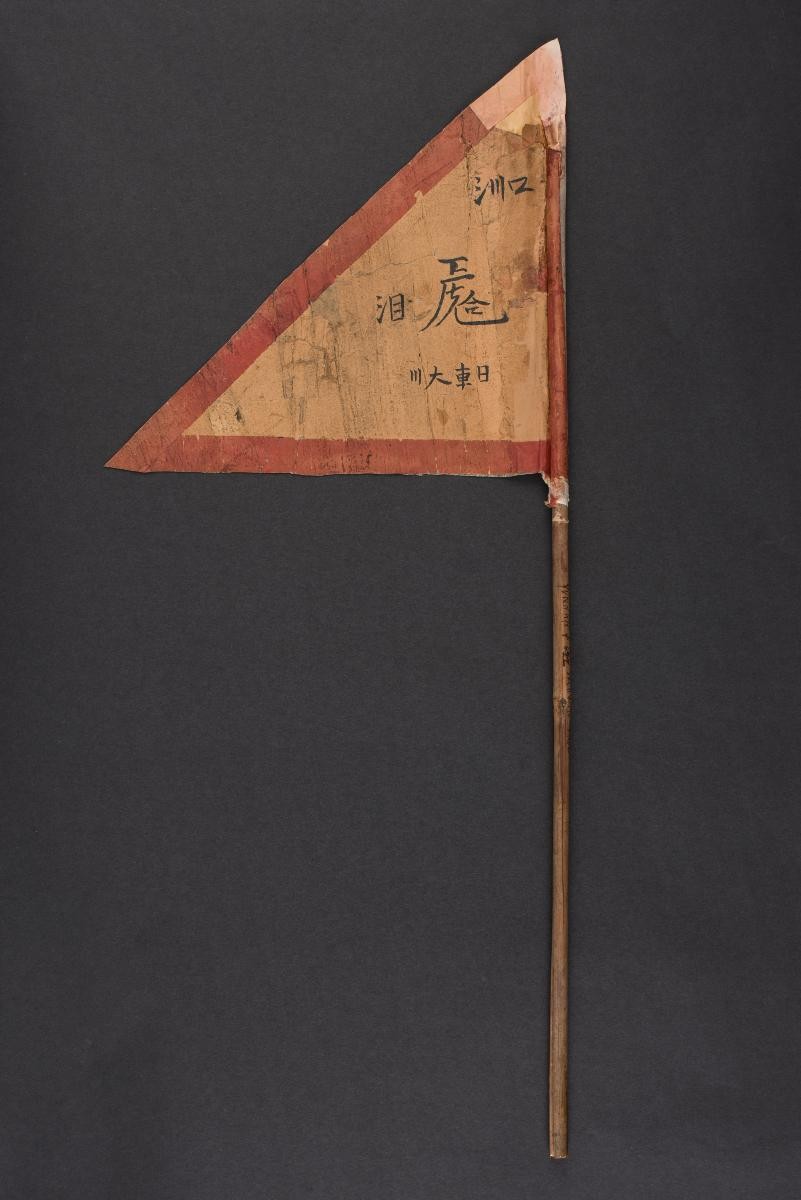
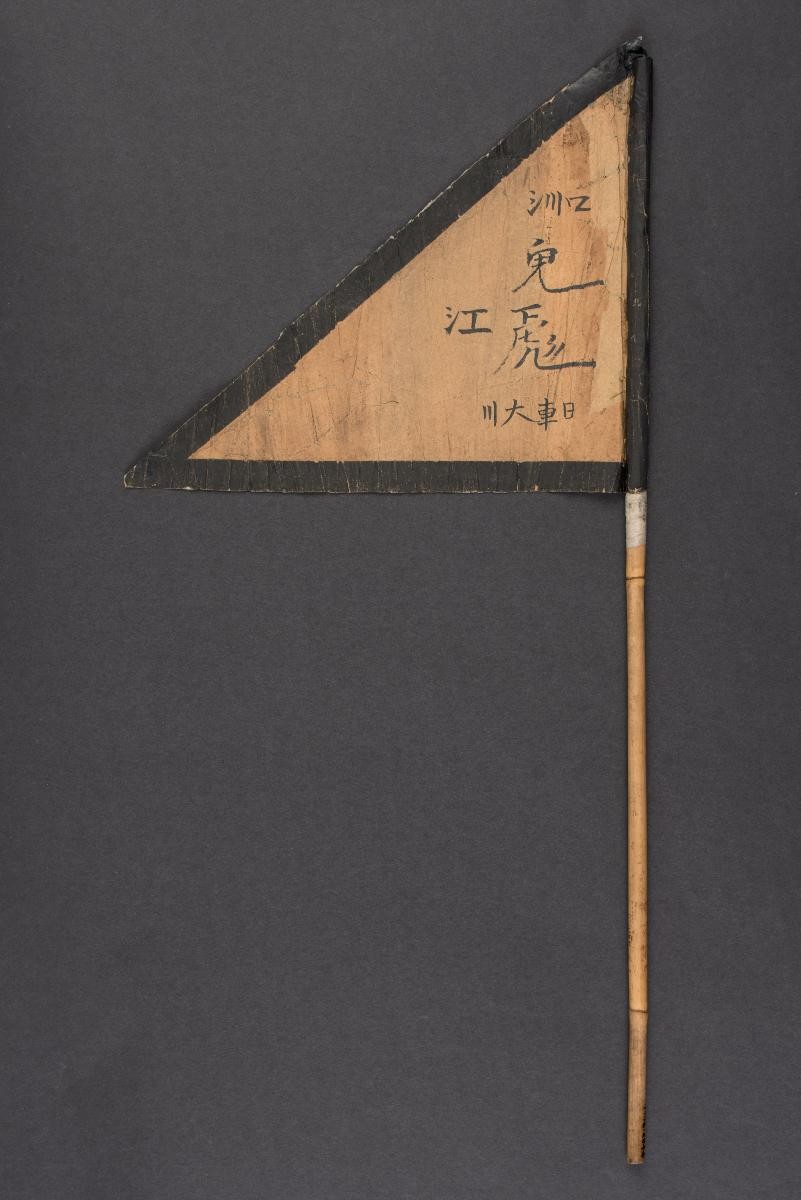
These are photographs of real early-20th-century ritual objects held by the National Museum of Singapore. The flags represent founding lodges in Tiandihui ceremonial practice. They document how the ancestors were remembered long after the era in which the legend is set. [2][3][4]
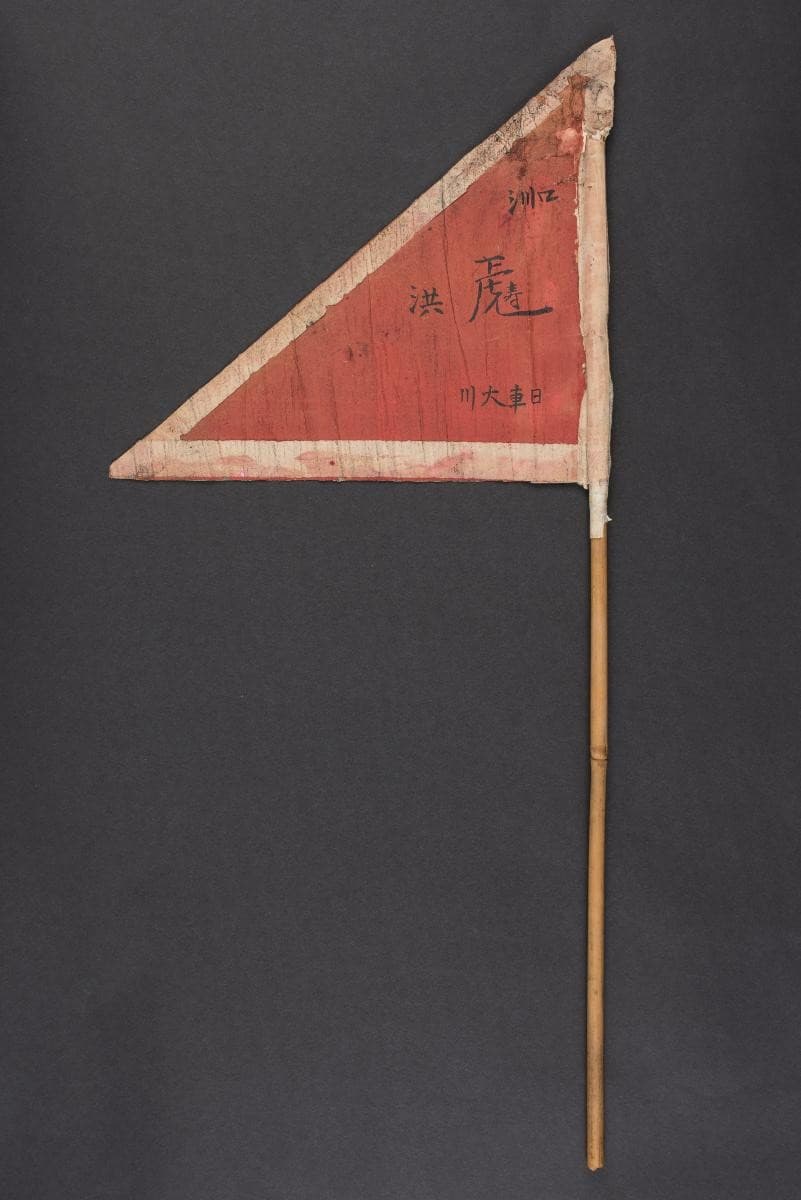
Collection: National Museum of Singapore / National Heritage Board. [2]
Collection: National Museum of Singapore / National Heritage Board. [3]
Collection: National Museum of Singapore / National Heritage Board. [4]
The museum identifies the red flag with a white border as Hongshuntang, the second principal lodge; the yellow flag with a red border as Jiahoutang, the third; and the flag with a black border as Honghuatang, the fifth. The objects belong to the William Stirling Collection. They are Singapore artifacts, not objects from the San Francisco lodge.
Two kinds of knowledge · 傳說與史實
Honor the tradition.
Understand the evidence.
What the legend preserves
An origin story can carry a community’s ideals: solidarity in adversity, loyalty to an oath and a sense of belonging beyond kinship. Its cultural importance does not depend on every episode being a literal event.
What archival research suggests
Dian H. Murray’s study, written with Qin Baoqi and published by Stanford University Press, places the Tiandihui’s beginnings in 1761 as a mutual-aid brotherhood. It treats the Xi Lu narrative as a story developed by later generations, rather than an eyewitness record of the society’s founding. [5]
This page focuses on Hongmen’s Five Ancestors. Other martial-arts traditions use “Five Elders” for different figures; the lists should not be treated as interchangeable.
Across the Pacific · 與舊金山致公堂的連繫
A cultural inheritance.
A San Francisco history.
For Chee Kung Tong, the connection is through Hongmen heritage and the continuing meaning of brotherhood. The San Francisco lodge’s own story is documented through people, gatherings, correspondence and community records.
The Five Ancestors provide a symbolic account of shared origins within Hongmen. They belong to the lodge’s broader cultural context, rather than a verified list of San Francisco founders.
UC Berkeley librarians describe San Francisco’s Chee Kung Tong as established in 1848. Their archival project records more than 5,000 items spanning over a century—a documentary foundation for studying the lodge’s history. [7]
The connection we draw today is ethical: preserve the past, keep faith with one another and serve our community. These themes give the inherited story meaning in a present-day San Francisco setting.
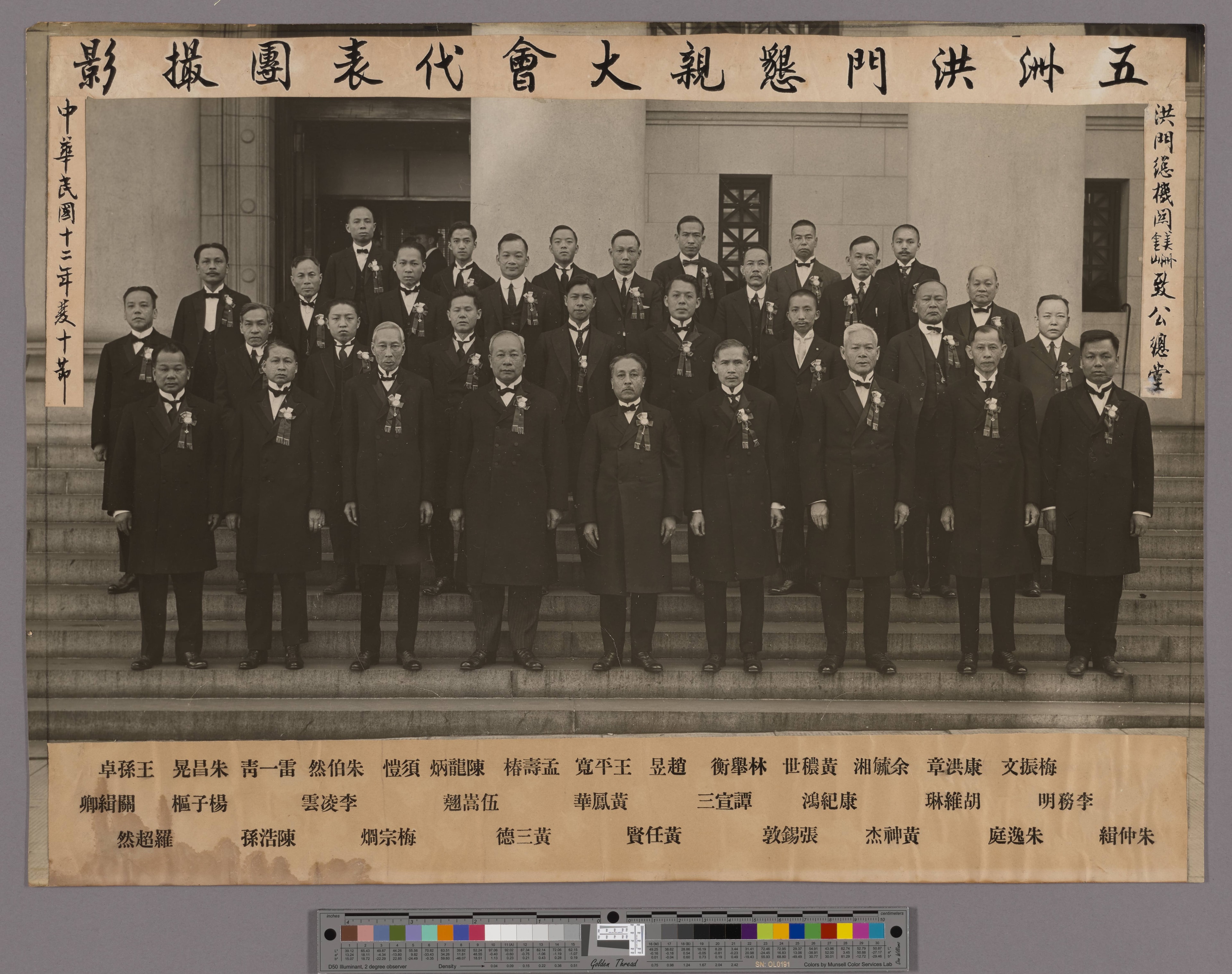
From inherited memory to recorded action
A July 1911 photograph in the Berkeley collection shows Sun Yat-sen with local associates during his revolutionary organizing in San Francisco. Together with later gathering photographs, it locates the lodge’s history in identifiable people and occasions. [9]
The distance between a founding legend and a dated photograph matters. One speaks to collective memory; the other helps establish what happened in a particular place and time. Both can be presented with care.
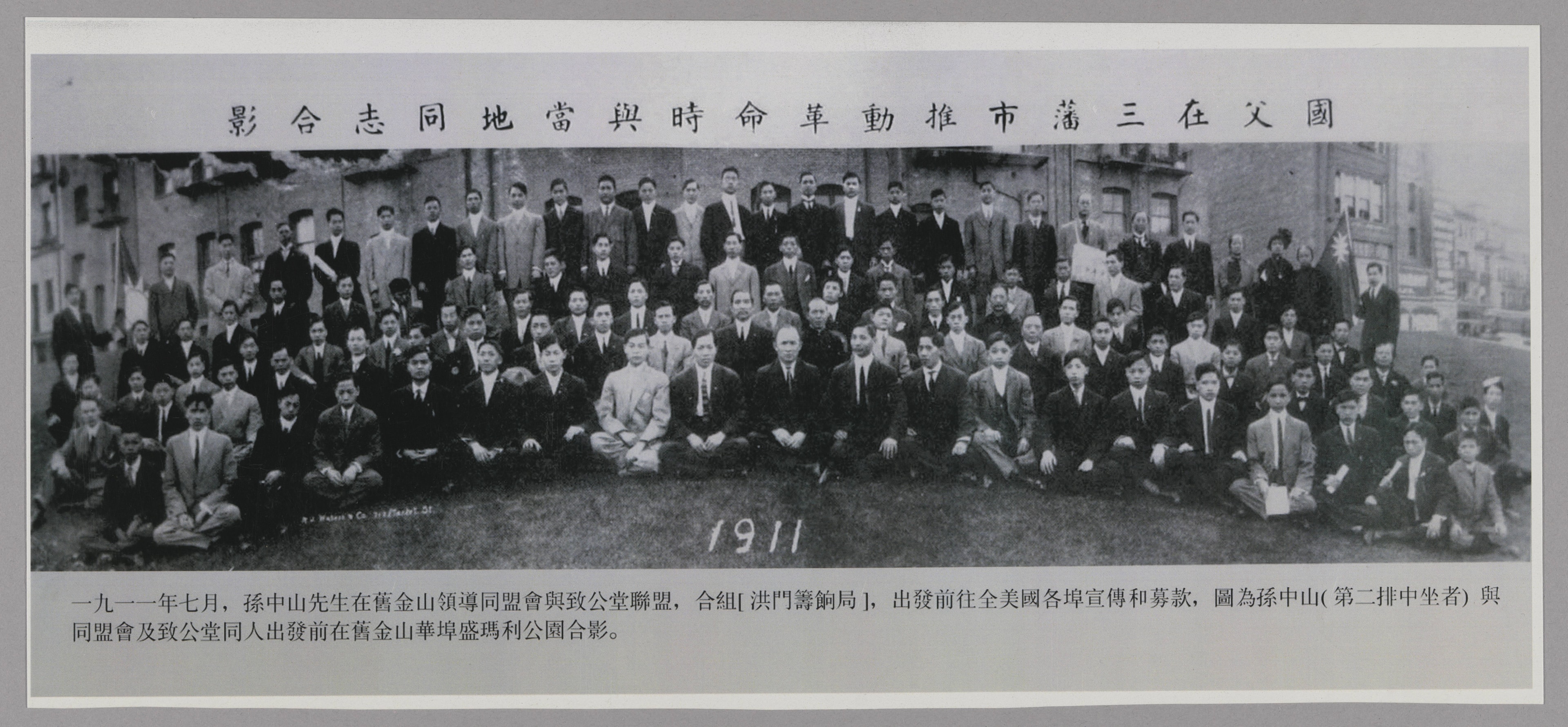
舊金山致公堂與五祖的連繫,在於洪門文化與精神的傳承。五祖並非已獲史料證實的舊金山創堂人。總堂在美洲的發展,應依據本地檔案、照片與相關文獻加以敘述。
Read the San Francisco history →Discover our principles →承先啟後・同心守義
The story remembers a bond.
Each generation gives it meaning.
Sources & image credits
- National Museum of Singapore · White censer and the Xi Lu legend ↗
- National Museum of Singapore · Second-lodge founding flag ↗
- National Museum of Singapore · Third-lodge founding flag ↗
- National Museum of Singapore · Fifth-lodge founding flag ↗
- Dian H. Murray with Qin Baoqi · The Origins of the Tiandihui (Stanford University Press, 1994) ↗
- Five Shaolin Ancestors · Reference summary of the traditional names and branches ↗
- UC Berkeley librarians · Chee Kung Tong archive research poster, 2020 ↗
- UC Berkeley · Worldwide Hongmen delegates, October 10, 1923 ↗
- UC Berkeley · Sun Yat-sen and San Francisco associates, July 1911 ↗
Researched September 2026. Traditional Chinese is used throughout. The chapter identifies the central altar illustration in its headquarters photograph as the Five Ancestors. Museum photographs show documented objects; archival photographs show later historical gatherings. The reference summary of the five names is cited for the traditional list, not as independent verification of the legend.