Sourced History

History & Legacy

歷史與傳承

Brotherhood, community, and a transpacific history — told through identifiable people, places, and documents.

Research checked September 26, 2026. Updated September 2026.

Chee Kung Tong's San Francisco story connects the formation of Chinatown, Chinese immigrant mutual aid, the revolutionary movement associated with Sun Yat-sen, and lasting community institutions. Surviving records let us tell that story through identifiable people, places, and documents rather than an anniversary number alone.

This account distinguishes an institution's origins, its later registration, and the dates of surviving records. Those are different milestones. Sources and archival links appear throughout so readers can explore the evidence themselves. The history is presented as a selection of documented milestones, not a claim to have examined every item in the archive.

01

Origins: what the dates mean

UC Berkeley's C. V. Starr East Asian Library dates the establishment of Chee Kung Tong, also called the Hongmen Society, to 1848, and its registration in San Francisco to 1879. These dates provide the basis for this account. The library's overview is a historical summary; it is not itself an original 1848 founding document. [1]

Research by the Chinese in Northwest America Research Committee distinguishes the older Hongmen movement from the later use of the name Chee Kung Tong. Its researchers identify reports of a Hung Society in San Francisco by 1854 and a San Francisco directory reference to Chee Kung Tong compiled in 1880. These references help explain why accounts can give different dates for the movement, an organization, and its name. [2]

The Hongmen tradition provided a language of fraternity and mutual obligation. In San Francisco, that tradition became part of an immigrant community building institutions far from home. The surviving historical record does not supply a verified founding day or a complete annual record beginning in 1848. The website's count of years of heritage for any given year is therefore a calendar-year measure of historical continuity, not an exact anniversary or a claim about uninterrupted operations. [1][7]

Origins, formal registration, and the adoption of a name can fall in different years. This account identifies what each date represents instead of presenting a single anniversary as the whole story.

From our history & community

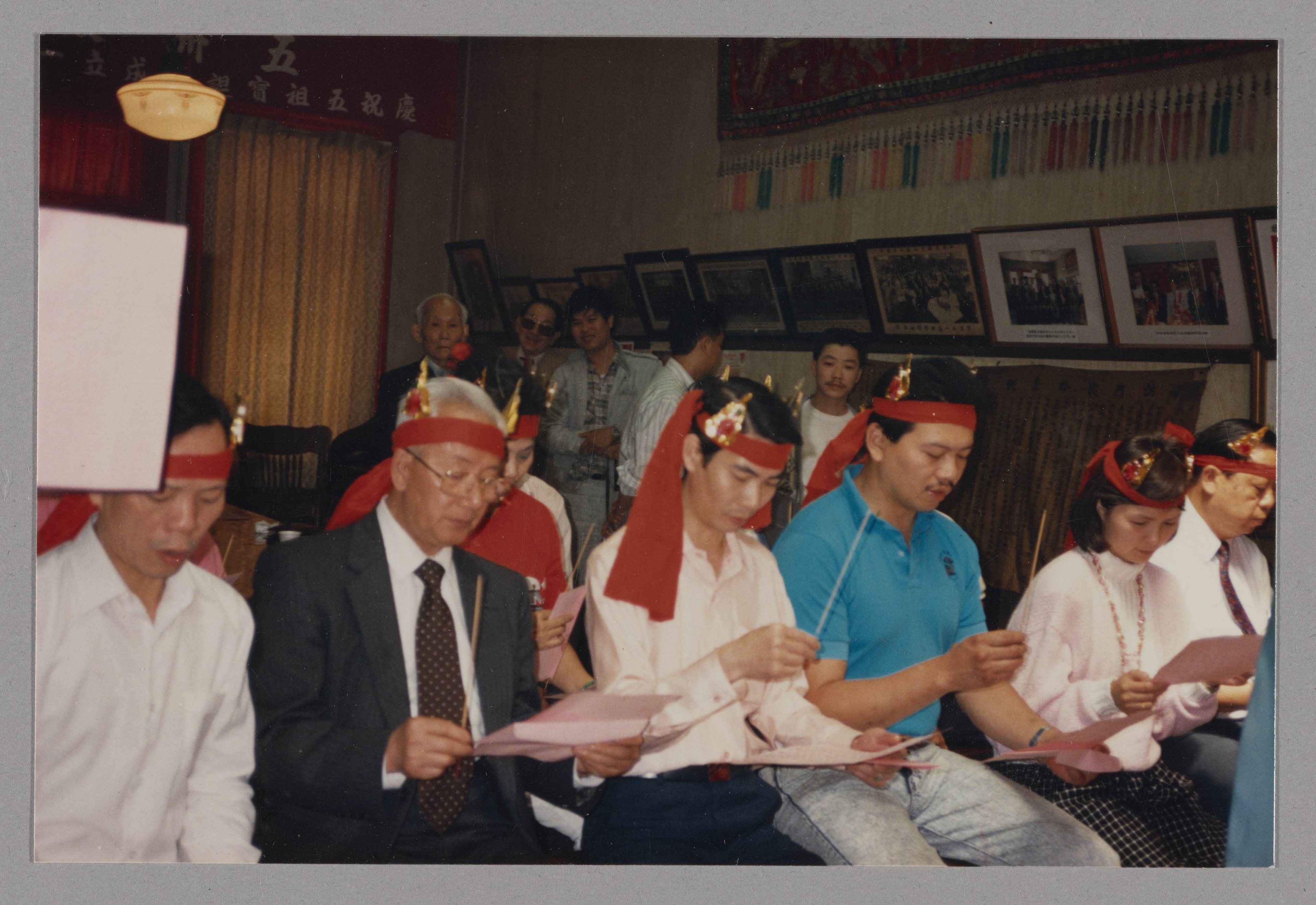
A Supreme Lodge spring celebration honoring the Five Ancestors — an expression of the Hongmen traditions carried forward by the chapter.
Five Ancestors observanceE-2-43

A Supreme Lodge spring celebration honoring the Five Ancestors — an expression of the Hongmen traditions carried forward by the chapter.

Chee Kung Tong Archive, C. V. Starr East Asian Library, UC Berkeley

View archive record
02

Mutual aid in the exclusion era

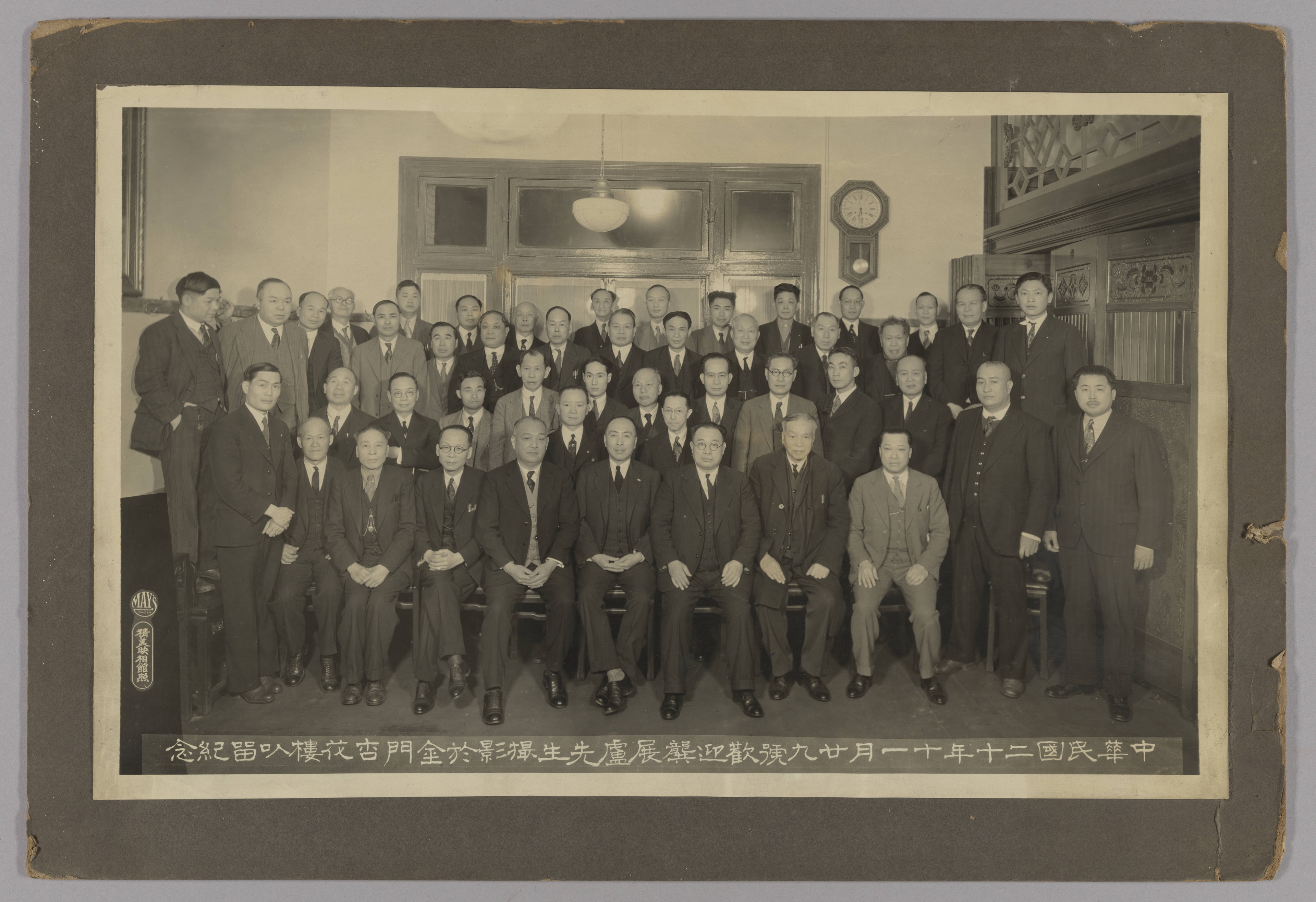
Chinese immigrants confronted laws that restricted entry, movement, and access to citizenship. The Chinese Exclusion Act of May 6, 1882 barred immigration by Chinese laborers for ten years and prohibited the naturalization of Chinese immigrants. Subsequent legislation extended the restrictions. Repeal in 1943 did not immediately create equal immigration access: a very small annual quota remained. These are the wider conditions in which Chinatown's associations operated. [3]

UC Berkeley's 2017–18 Library Annual Report describes the San Francisco Chee Kung Tong as a benevolent society that provided immigrants with housing and protection during the exclusion era. Mutual aid was therefore a practical response to insecurity as well as an expression of belonging. [4]

From our history & community

Welcoming Gong Zhanlu at Hang Far Low, San Francisco. A gathering during the exclusion era, photographed by May’s Photo / 精美映相館.
November 29, 1931S-E-39

Welcoming Gong Zhanlu at Hang Far Low, San Francisco. A gathering during the exclusion era, photographed by May’s Photo / 精美映相館.

Chee Kung Tong Archive, C. V. Starr East Asian Library, UC Berkeley

View archive record
03

Sun Yat-sen and 36 Spofford Street

The lodge's address at 36 Spofford Street belongs to a wider history of connections between San Francisco and political change in China. San Francisco Planning's Chinese American Historic Context Statement identifies the building as a place where Chee Kung Tong supported and housed Sun Yat-sen and as a center of revolutionary activity. It also associates the lodge's Chinese Free Press with the circulation of his ideas. [5]

The Chinese in Northwest America Research Committee dates Sun's formal joining of a Hawaiian branch to 1904 and identifies San Francisco leader Wong Sam Duck, also known as Huang Sande (黃三德), in a photograph with Sun and supporters in Chicago that year. This places the San Francisco lodge within a network that extended beyond a single neighborhood. [2]

Berkeley's own account describes the organization's contribution to the movement that helped bring down China's last imperial dynasty. The lodge belonged to a wider overseas support network: the revolutionary history of the period involved many communities and organizations. [4]

From our history & community

Sun Yat-sen with local associates in San Francisco during his revolutionary organizing.
July 1911E-2-31

Sun Yat-sen with local associates in San Francisco during his revolutionary organizing.

Chee Kung Tong Archive, C. V. Starr East Asian Library, UC Berkeley

View archive record
04

Rebuilding Chinatown and surviving records

The 1906 earthquake and fire devastated Chinatown. Chinese Hospital's Institutional Master Plan describes efforts to move Chinese residents to Bayview and Hunters Point, and the community's rebuilding in the existing neighborhood. This wider struggle to remain in Chinatown forms the setting for the lodge's surviving early twentieth-century records. [10]

An especially useful primary-source reference is Berkeley's catalog entry for a California certification of filing of articles of incorporation dated November 23, 1906. The catalog names the California Chinese Free Mason Society/Chee Kung Tong Society and assigns the item the identifier A1-1-1. A document issued in 1906 is evidence for that record; it should not be mistaken for proof that the organization first began in 1906. [6]

The archive continues beyond the revolutionary years. In a presentation about processing the collection, Berkeley librarians Jianye He and Fumei Chen Lin identify an October 29, 1914 meeting record discussing a proposed remittance to Sun Yat-sen, and a 1923 document concerning revised organizational rules with an inserted resolution about forming a political party. These examples show continuing fundraising and institutional debate. A discussion recorded in minutes is not, by itself, proof that a proposed payment was completed. [7]

From our history & community

The original Chee Kung Tong San Francisco chapter building, showing its balconies, external stairway and horse-drawn cart.
Our original San Francisco chapter building

The original Chee Kung Tong San Francisco chapter building.

Chee Kung Tong chapter collection

Explore our San Francisco lodge
05

1911: fundraising, organizing, and a photographic record

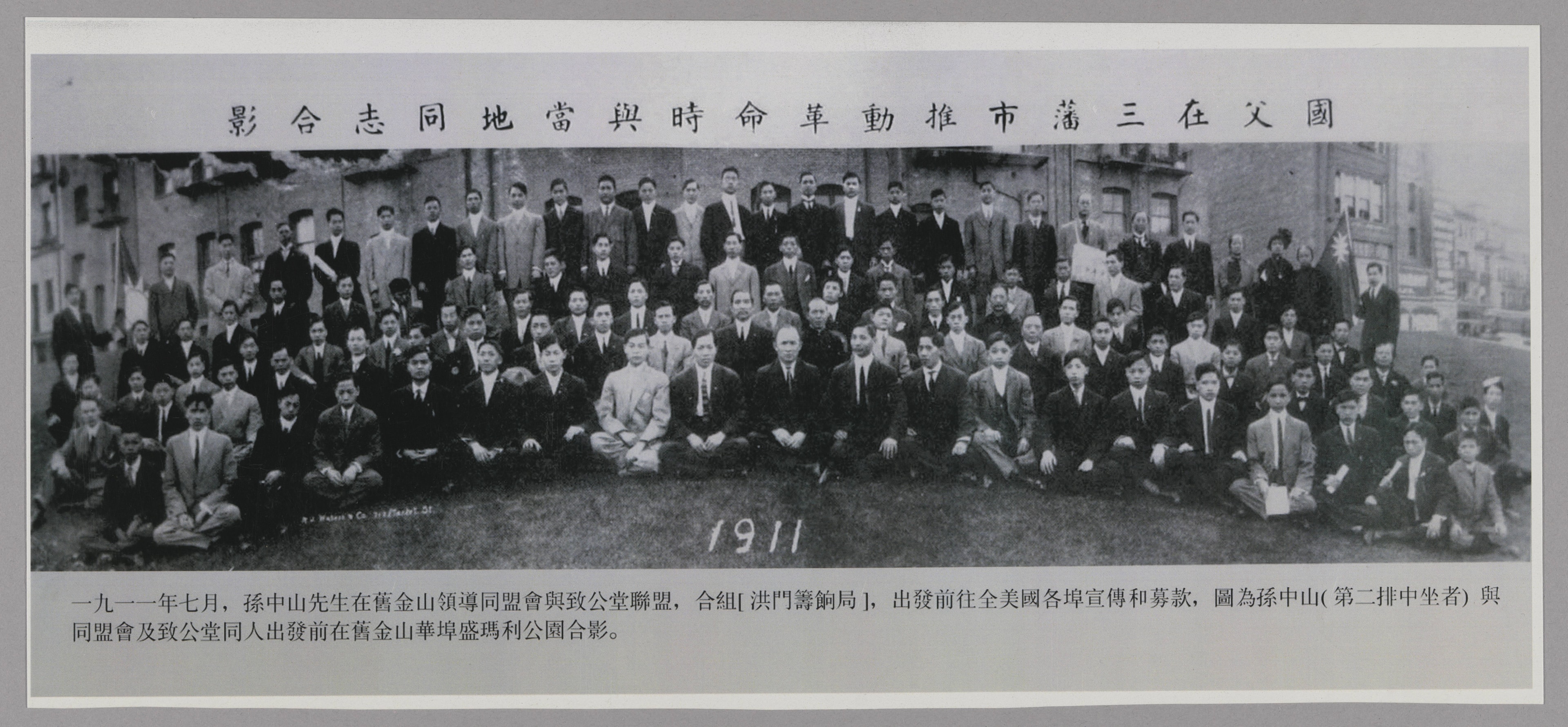
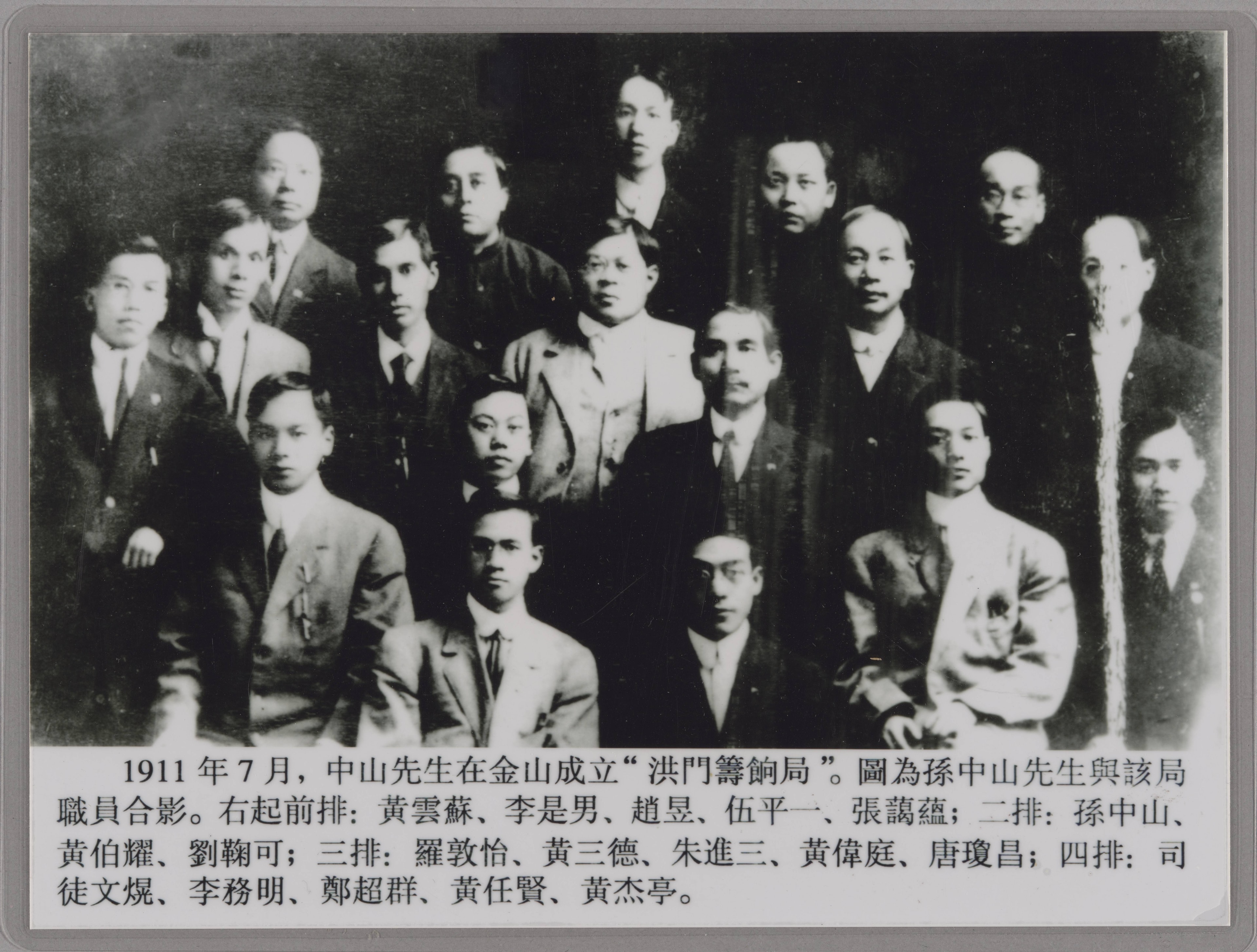
The revolutionary period is visible in photographs as well as written accounts. Berkeley's catalog dates a Hongmen fundraising bureau photograph to approximately July 1911 and identifies Sun Yat-sen and Wong Sam Duck among those pictured. [16] A separate 1911 photograph records bureau staff with three Tongmenghui members. [17] These are distinct images of organizing networks; they should not be treated as interchangeable portraits of a single meeting.

The archive also preserves a street procession involving Chee Kung Tong, the Tongmenghui, and the Jinlan Lodge. Its catalog gives 1911 without a month. [18] The image offers a view of public collective activity, while the uncertain dating should stay visible. Photographs can establish that a group or scene was recorded; financial totals and individual responsibilities require additional documents.

From our history & community

Hongmen fundraising bureau, approximately July 1911. Sun Yat-sen and Wong Sam Duck identified among those pictured.
c. July 1911S-E-3

洪門籌餉局

Hongmen fundraising bureau, San Francisco. Sun Yat-sen and Wong Sam Duck (黃三德) identified among those pictured.

Chee Kung Tong Archive, C. V. Starr East Asian Library, UC Berkeley

Berkeley record 314053

From our history & community

Hongmen fundraising bureau staff with three Tongmenghui members, 1911.
1911S-E-23

洪門籌餉局職員

Fundraising bureau staff with three Tongmenghui members. A distinct image from the July bureau photograph.

Chee Kung Tong Archive, C. V. Starr East Asian Library, UC Berkeley

Berkeley record 295995
06

A network visible in everyday paperwork

History survives in ledgers as well as commemorations. Berkeley catalogs a Supreme Lodge income-and-expenditure volume covering September 1923 to September 1925. Its index records many associated organizations, including branches in Canada, Mexico, the United States, and farther afield. The catalog offers a starting point for studying relationships across borders; it is not a current directory of active lodges. [8]

Archaeological research published by the University of Arizona Press also describes a document recovered from the Tucson lodge that referred to the Supreme Lodge at 36 Spofford Alley in San Francisco. This is material evidence of San Francisco's place in a wider organizational network. [9]

From our history & community

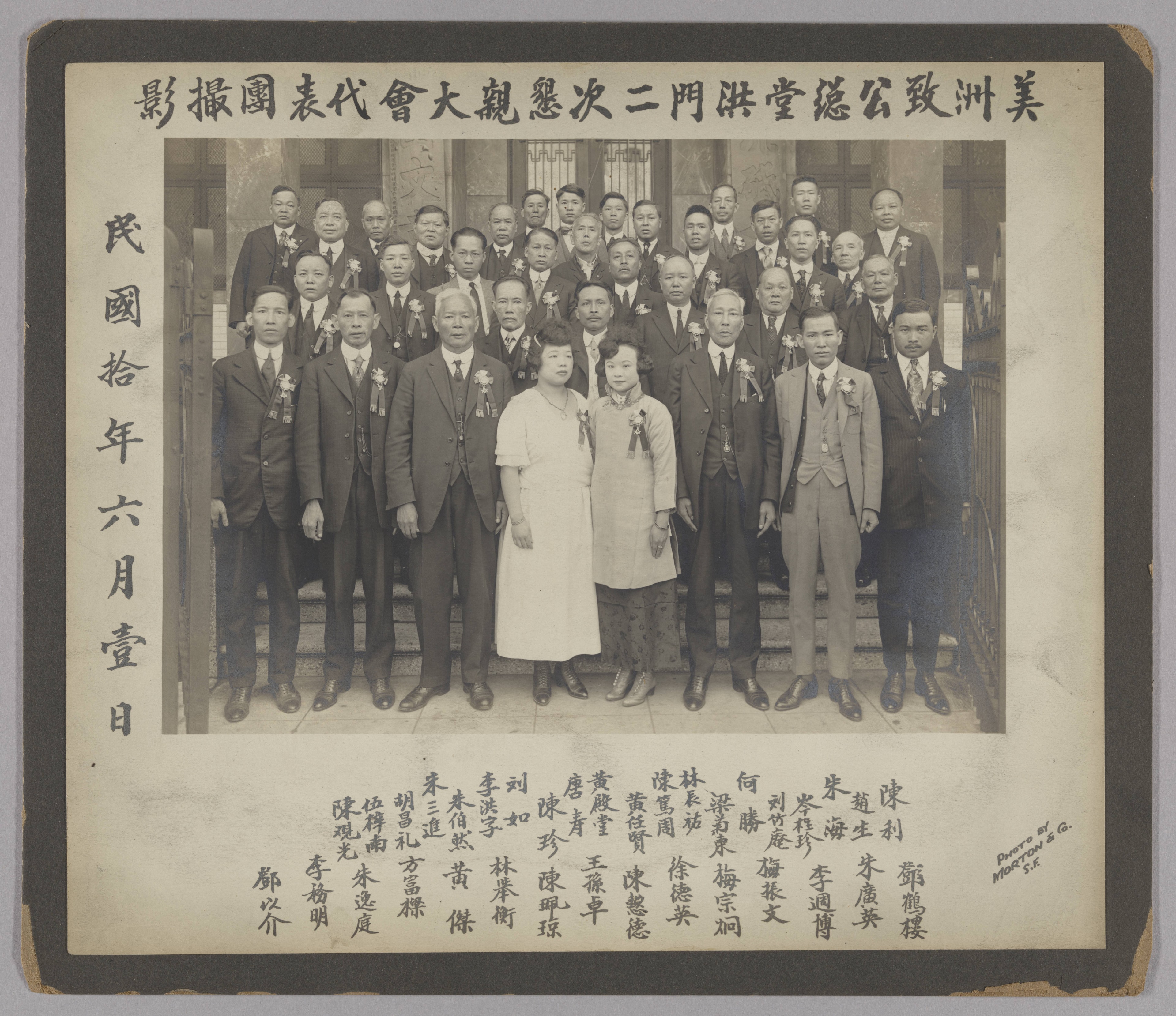
Delegates to the second Hongmen gathering of the Americas Chee Kung Tong Supreme Lodge. Photograph by Morton & Co.; preserved as a photographic reproduction.
June 1, 1921S-E-75

Delegates to the second Hongmen gathering of the Americas Chee Kung Tong Supreme Lodge. Photograph by Morton & Co.; preserved as a photographic reproduction.

Chee Kung Tong Archive, C. V. Starr East Asian Library, UC Berkeley

View archive record
07

1913–1925: gatherings across a wider network

The archive's surviving photographs make the lodge's connections tangible across more than a decade. A fall 1913 studio group portrays the San Francisco Chinese Republic General Association. [19] Delegate photographs dated April 7, 1918 and June 1, 1921 record Hongmen gatherings associated with the Americas headquarters. [20][21] Berkeley describes the 1921 image as a photographic reproduction, an important distinction when considering the surviving object.

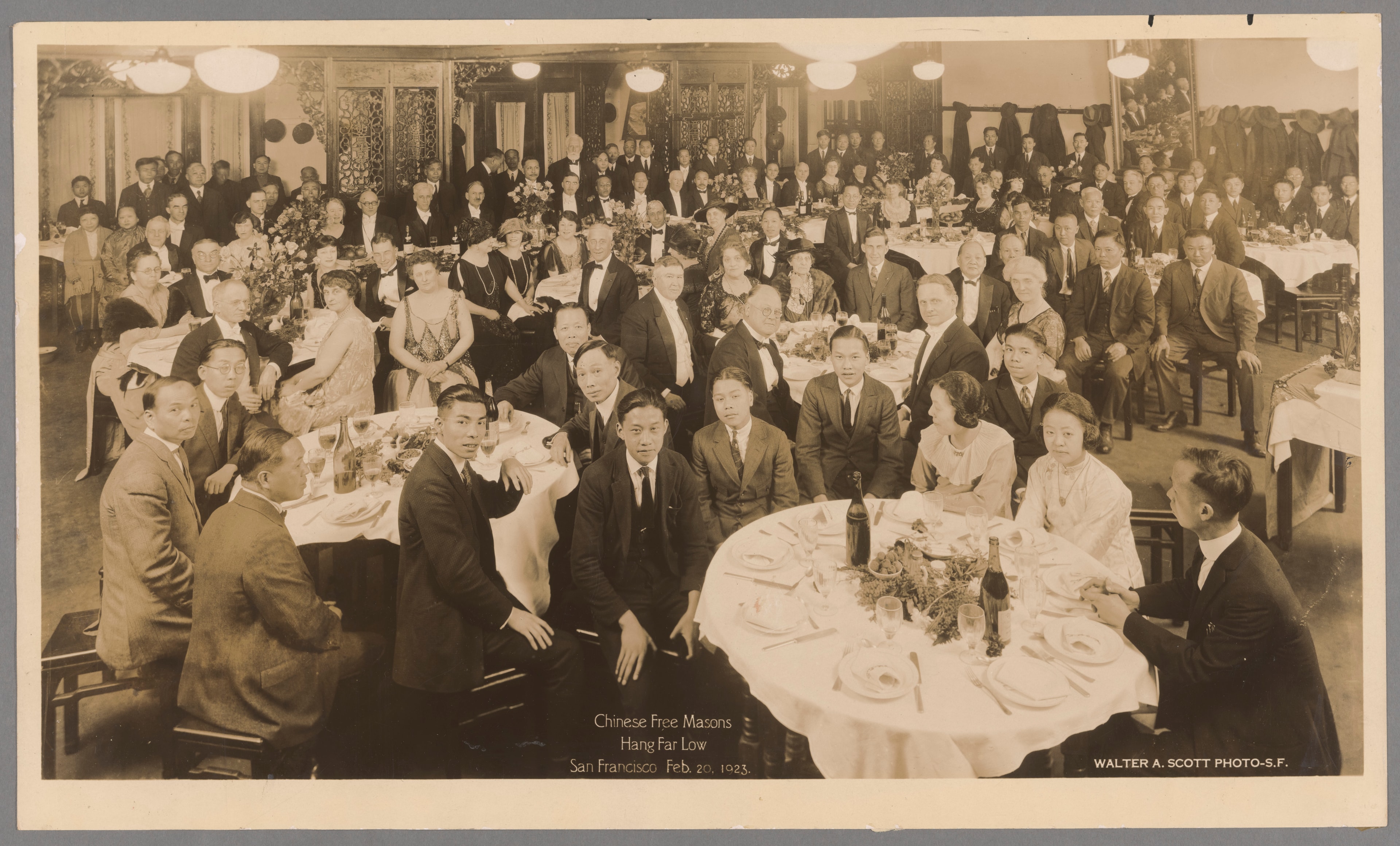
Two different 1923 images tell complementary stories: the February 20 gathering at Hang Far Low in San Francisco and the October 10 portrait of worldwide Hongmen gathering delegates. [22][23] Together they show how banquets and formal group photography served as ways of recording collective identity. They do not, by themselves, establish the full membership or agenda of those gatherings.

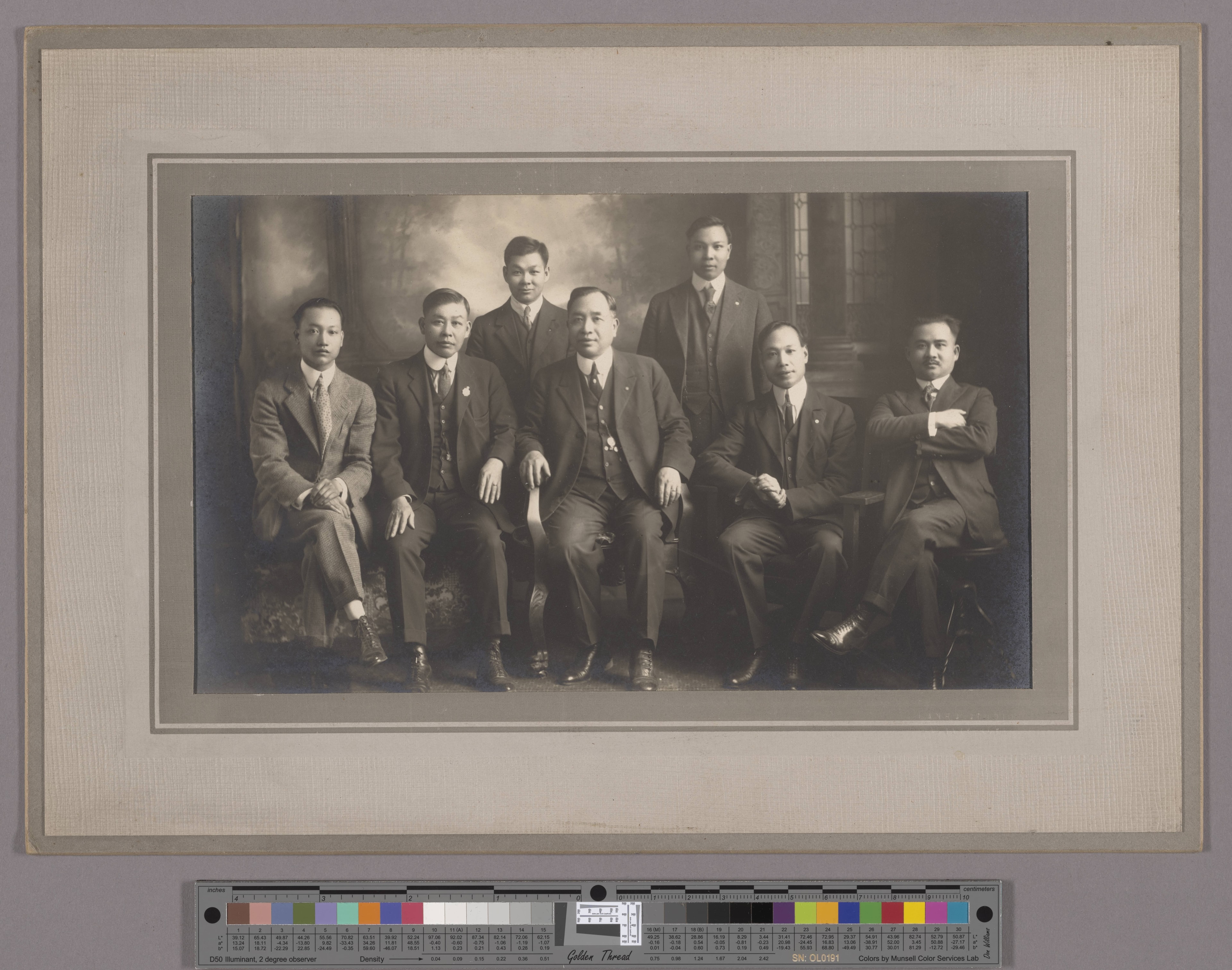
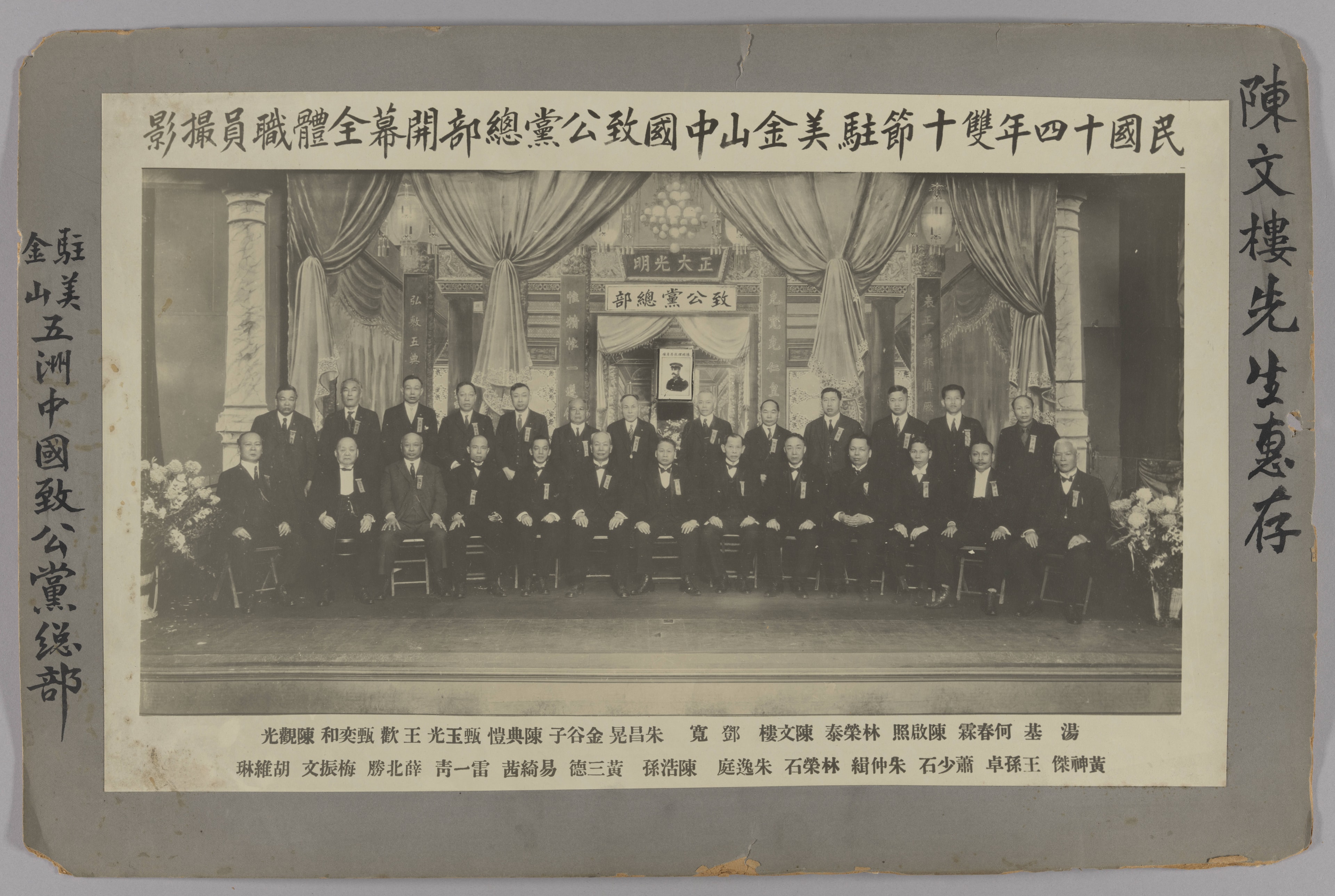
October 10, 1925 is represented by both a commemorative group of four men and a larger headquarters staff photograph associated with the historical Zhi Gong Party. [24][25] These should be read alongside the existing sourced discussion of 1925, without implying a present-day political affiliation for the San Francisco lodge.

From our history & community

Chinese Freemasons gathering at Hang Far Low restaurant, San Francisco, February 20, 1923. Photographed by Walter A. Scott.
February 20, 1923S-E-86

中華共濟會在杏花樓聚會

Chinese Freemasons gathering at Hang Far Low, San Francisco. Photographed by Walter A. Scott.

Chee Kung Tong Archive, C. V. Starr East Asian Library, UC Berkeley

Berkeley record 296004
08

Political developments in 1925

The history also has a political branch. China's State Council Information Office, describing the China Zhi Gong Party's institutional history, dates its founding by an overseas Hung Society Zhi Gong Hall to October 1925 in San Francisco. That account is attributed here as the government's description of the party's origins. Historical connections should not be read as proof of the present San Francisco lodge's governance, membership, or political affiliation. [14]

From our history & community

The San Francisco Chinese Zhi Gong Party headquarters opening, showing the staff of the historical organization discussed in this section.
October 10, 1925S-E-30

The San Francisco Chinese Zhi Gong Party headquarters opening, showing the staff of the historical organization discussed in this section.

Chee Kung Tong Archive, C. V. Starr East Asian Library, UC Berkeley

View archive record
09

Helping build community health care

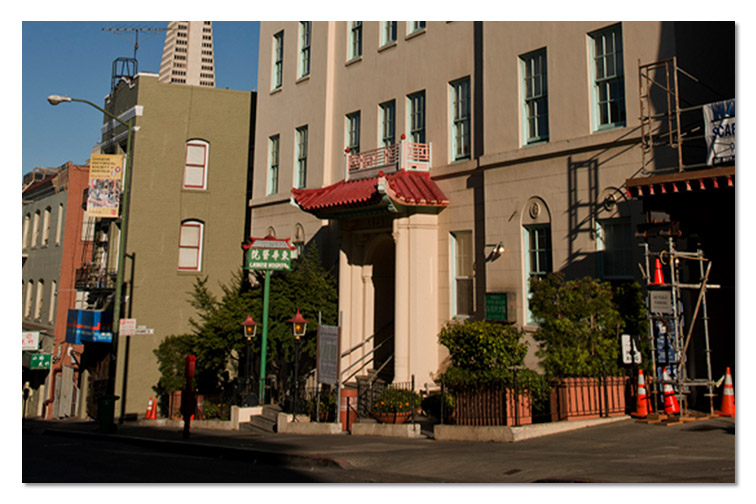
Chee Kung Tong's local story includes Chinese Hospital. The hospital's Institutional Master Plan lists Chee Kung Tong among its founding community organizations. This places the lodge alongside other associations in an enduring effort to support health care in Chinatown. [10]

The hospital's own history dates the formation of the Chinese Hospital Association to 1923 and the opening of its facility at 835 Jackson Street to 1925. Its predecessor, the Tung Wah Dispensary, had served the community from 1899. These milestones belong to the hospital and its coalition of supporters, rather than to Chee Kung Tong alone. [11]

The connection remains visible in contemporary institutional records. Chinese Hospital's 2024 and 2025 Annual Reports both list Clifton Leung with the affiliation Chee Kung Tong on the Board of Trustees. These dated institutional records provide a recent point of connection between the lodge and a Chinatown health-care institution whose founding coalition included Chee Kung Tong. They document those reporting years; they should not be used to infer the starting date of his service or the lodge's complete recent activity calendar. [12][26]

From our history & community

The original Chinese Hospital building on Jackson Street.
The original hospital · Opened 1925

東華醫院

The original Chinese Hospital at 835 Jackson Street, opened in 1925.

Photograph: Chinese Hospital history collection

Chinese Hospital history

From our history & community

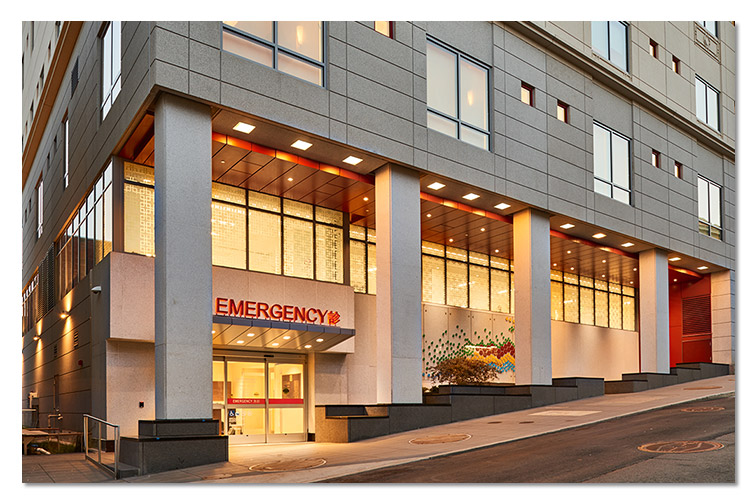
Chinese Hospital’s modern patient tower illuminated at night.
The modern tower · Opened 2016

The modern patient tower, opened in April 2016, continues the hospital’s service to the community.

Photograph: Chinese Hospital

Chinese Hospital history
10

Records beyond the revolutionary era: 1945–2001

Chee Kung Tong's documentary history extends well beyond the early twentieth-century photographs. Berkeley catalogs a ledger, 民國三十四年進支數總部, covering 1945–1950, with the identifier A5-5-10 and San Francisco provenance. Its index includes people, associations, businesses, and newspapers. The volume is evidence of surviving organizational recordkeeping; the catalog alone does not establish what each listed relationship involved. [27]

A second source is held in a different Berkeley repository. The Ethnic Studies Library's finding aid for the Kem K. Lee Photographs and Other Materials lists a folder concerning Chinese Freemasons, Bing Kung Tong, and Chee Kung Tong for 1946–1967: Box 24, folder 40. This is a research lead into the postwar decades, not a claim that every photograph in that folder depicts this lodge or has already been examined for this website. [28]

The Chee Kung Tong Archive also contains an account volume cataloged for 1964–1971, A5-2-14, associated with the Gone Goo Duk Hon publication. Its index connects the headquarters with a broad range of organizations and publications. These records offer a foundation for studying later community and publishing networks without inventing a year-by-year institutional narrative. [29]

The collection reaches into the later twentieth century. Berkeley catalogs a Supreme Lodge income-and-expenditure volume for 1990–2001, under 五洲洪門致公總堂進支部. Such records matter because organizational history includes administration and everyday stewardship as well as public celebrations. The date range describes that volume; its individual entries require study before more detailed historical conclusions can be drawn. [13]
From our history & community

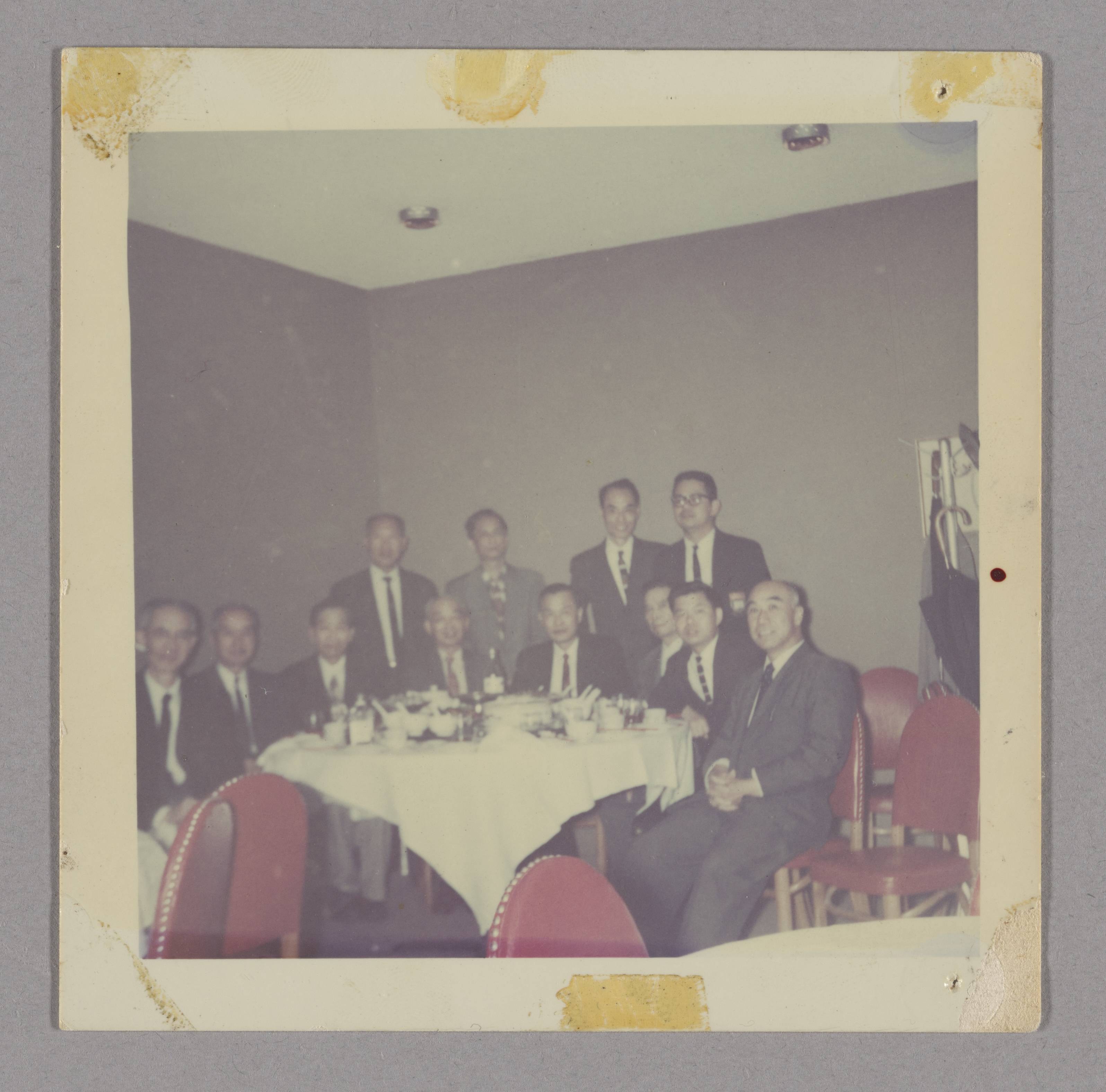
Five Ancestors commemoration and the second anniversary of the 鐘鼓 special publication, at Kwok Wah restaurant in San Francisco.
1963E-2-94

Five Ancestors commemoration and the second anniversary of the 鐘鼓 special publication, at Kwok Wah restaurant in San Francisco.

Chee Kung Tong Archive, C. V. Starr East Asian Library, UC Berkeley

View archive record

From our history & community

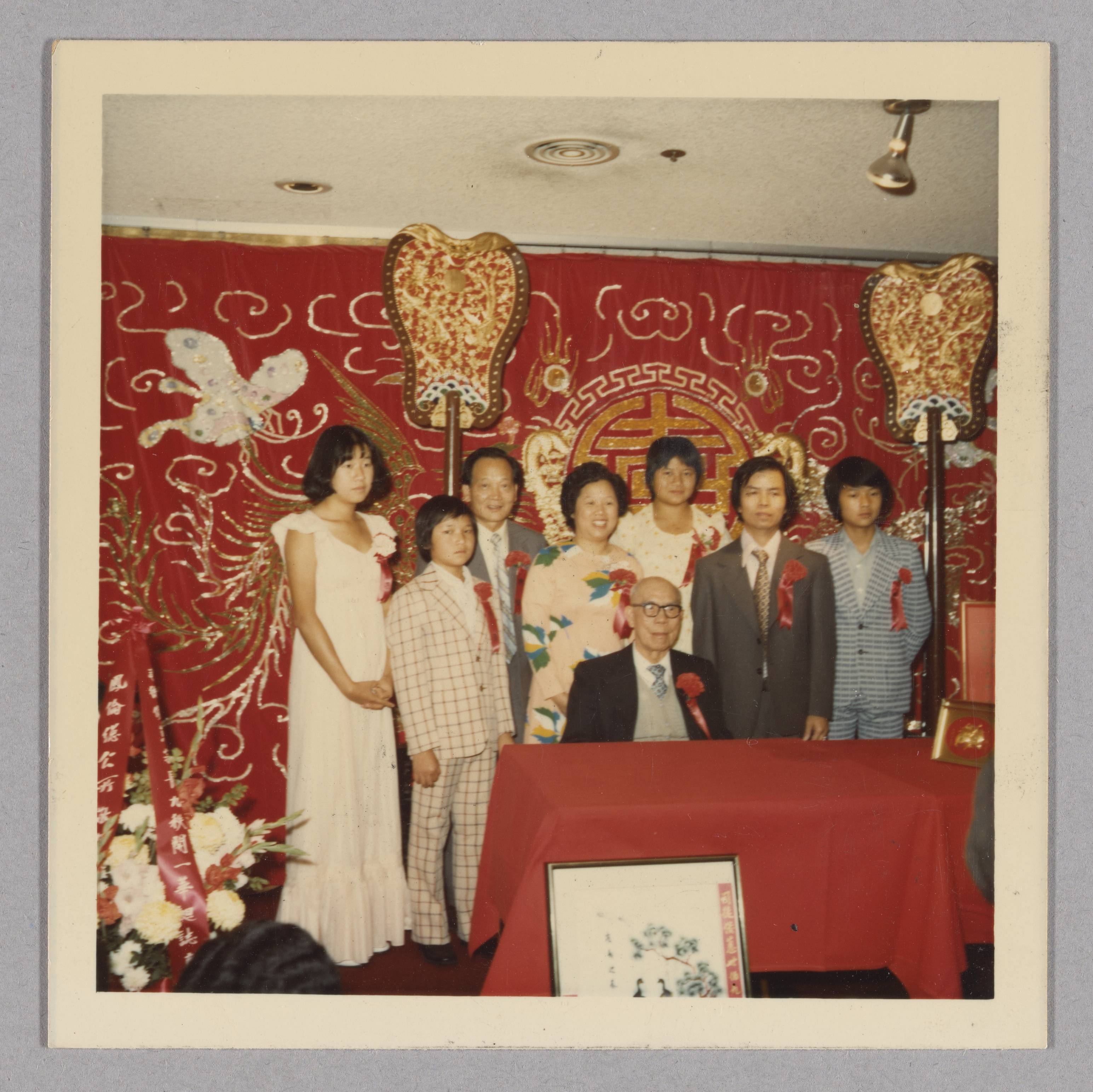
Szeto Juncong’s 79th birthday banquet / 司徒俊蔥79歲生日宴會 — a chapter celebration preserved in the archive.
1975E-2-10

Szeto Juncong’s 79th birthday banquet / 司徒俊蔥79歲生日宴會 — a chapter celebration preserved in the archive.

Chee Kung Tong Archive, C. V. Starr East Asian Library, UC Berkeley

View archive record
11

Preserving the archive: 2018–2020

In May 2018, Chee Kung Tong donated historical records and photographs to UC Berkeley's C. V. Starr East Asian Library. [1] The librarians' 2020 presentation describes the practical work behind making the collection useful: sorting materials, developing a classification system, identifying people and places, checking dates, and planning conservation and digitization. Their preliminary inventory counted 5,169 items, including 258 photographs. These are the processing team's figures at that stage, not a claim about the present number of online records. [7]

Preservation made a new kind of access possible. Correspondence, accounts, organizational papers, and photographs can be studied together rather than leaving the public story dependent on a few famous names. The original documents and their descriptions remain essential guides for future additions to this history.

Preserving this documentary record is itself part of the lodge's legacy. Future additions can draw on family photographs, oral histories, meeting records, and correspondence, provided each item is identified, dated where possible, and used with appropriate permission.

From our history & community

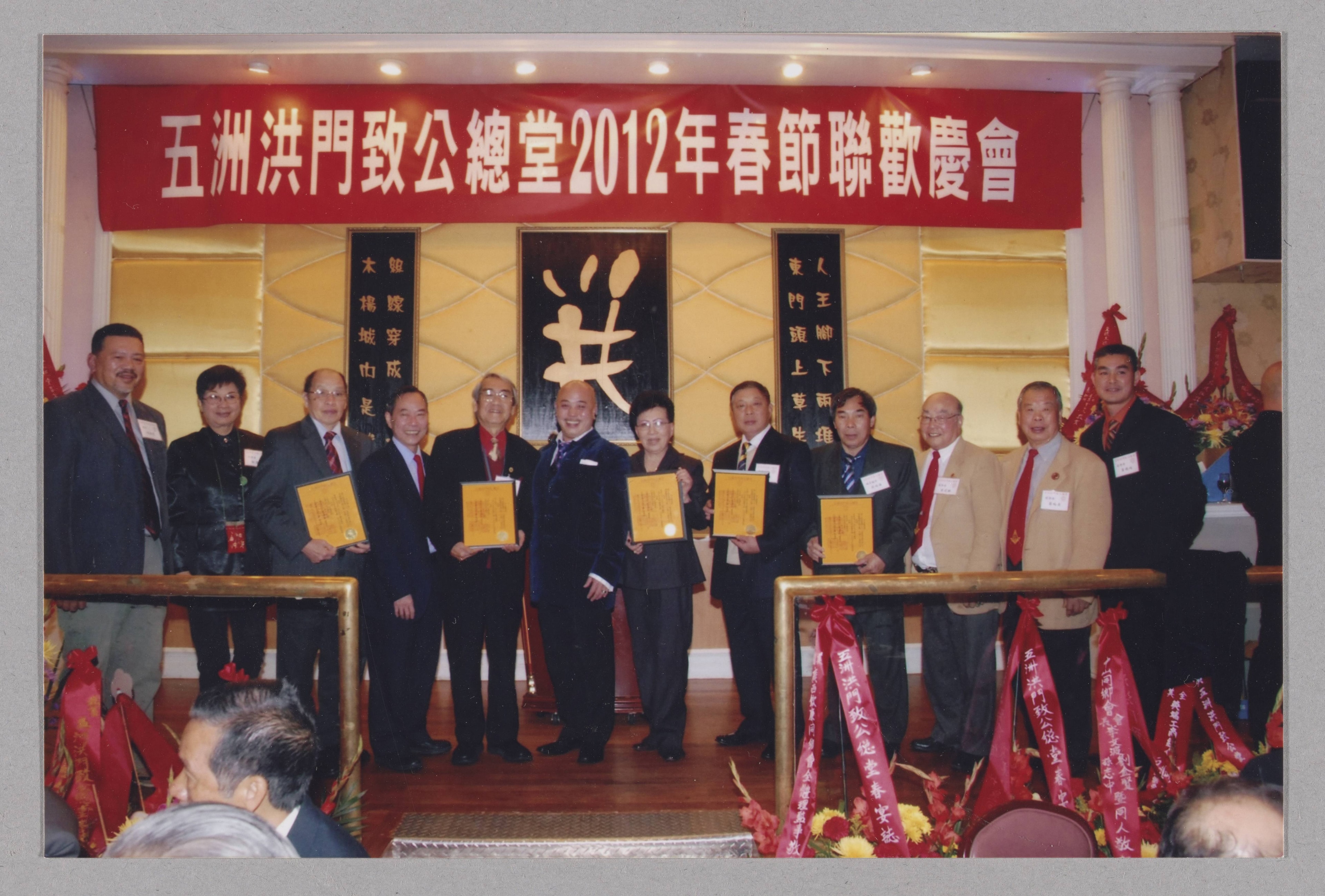
The Supreme Lodge’s 2012 Lunar New Year celebration — one of the later photographs preserved in the Chee Kung Tong Archive.
2012 · Preserved in the lodge archiveE-2-15

The Supreme Lodge’s 2012 Lunar New Year celebration — one of the later photographs preserved in the Chee Kung Tong Archive.

Chee Kung Tong Archive, C. V. Starr East Asian Library, UC Berkeley

View archive record
12

The San Francisco chapter today — September 2026

The chapter's current executive roster, supplied for this website, identifies Clifton Leung as President, Ping Chiu as Vice President, Olivia Lam as Treasurer, and Alan Chiu as Principal Historian. Their names and roles are presented on the Executive Members page.

Today, this website brings the chapter's leadership information together with a sourced historical account and a gallery of fourteen archival photographs. Its purpose is to make the lodge's documented past easier to explore and to keep that history connected to the present community. The gallery identifies dates, photographers where known, collection credits, and original archive records.

The next chapter of this history can be built from dated chapter records, identified family photographs, and recorded recollections. Recent events should be added with their dates and supporting details, so that future readers can distinguish documented history from memory and interpretation.

From our history & community

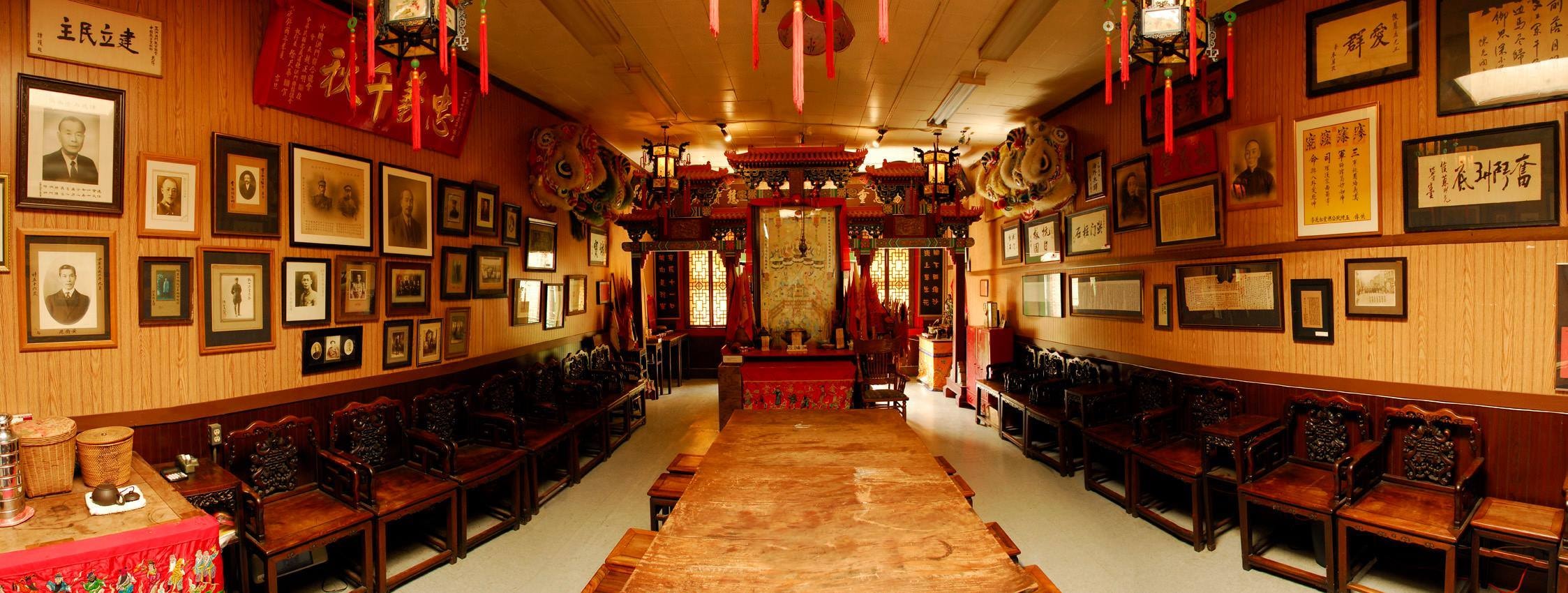
The San Francisco headquarters meeting room and central altar.
Our San Francisco headquarters

舊金山致公總堂

Our chapter’s meeting room at 36 Spofford Street, with the Five Ancestors illustration at the central altar.

Photograph provided by the chapter

Meet our San Francisco chapter
13

Reading the history responsibly

The Hongmen tradition, a particular lodge, a later political organization, and a present-day institution should not be treated as interchangeable. Similarly, "Chinese Freemasons" is a historical name, not evidence of a charter from a Western Masonic grand lodge. Masons of California explicitly distinguishes Chee Kung Tong from its own fraternal order. [15]

Older newspapers and accounts of Chinatown must be read critically. San Francisco Planning discusses both violence involving some tongs and the sensational treatment of "tong wars" in the press. Broad labels should not substitute for evidence about a specific organization, person, event, or period. [5]

This is a sourced overview, not a claim to have examined every item in the archive. Institutional summaries, primary documents, catalog descriptions, and later historical interpretations are identified for what they are. Exact membership totals, detailed building-construction dates, and claims of continuous operations should be added only when their supporting records are available.

From our history & community

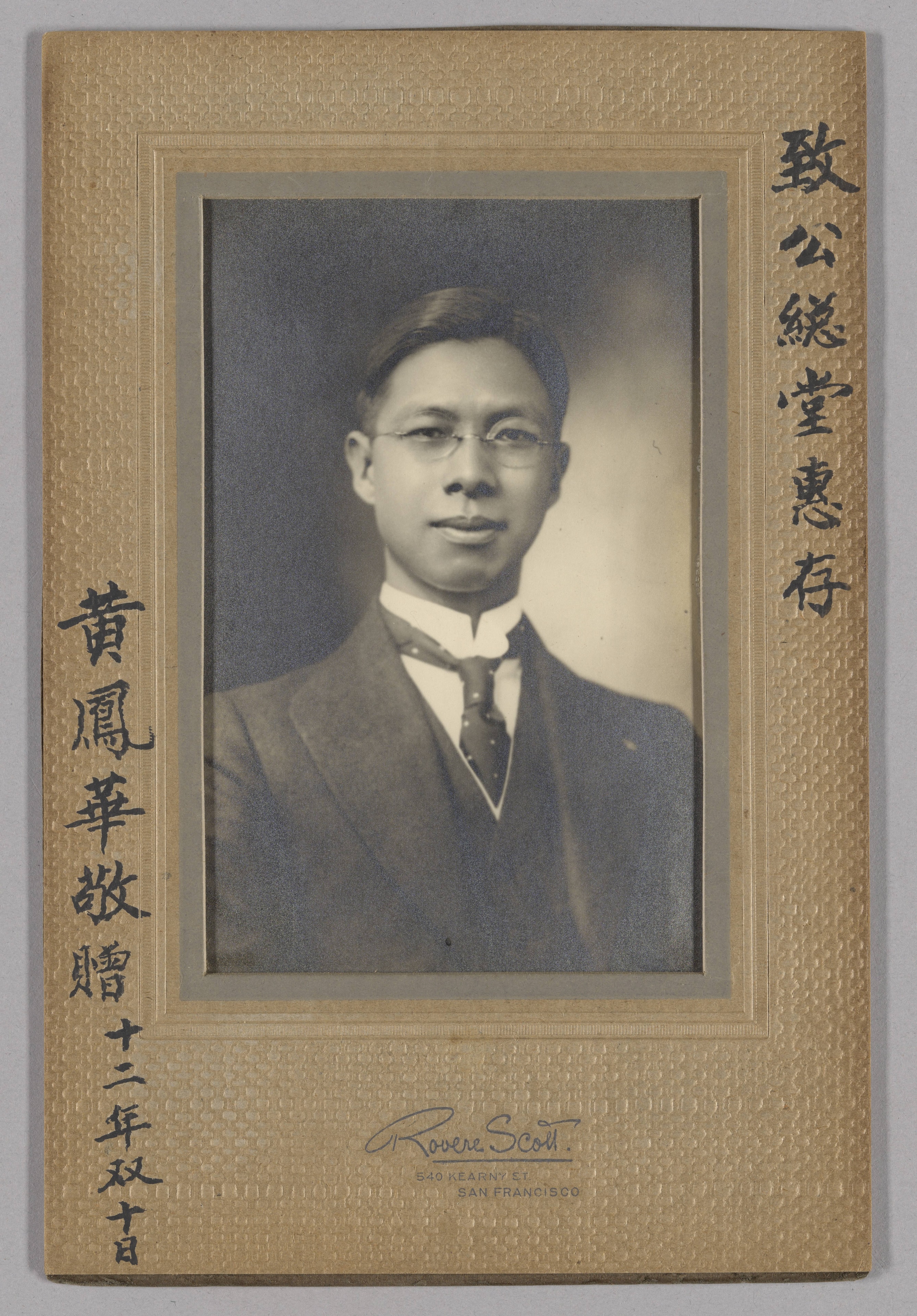
Huang Fenghua / 黃鳳華, with a dated dedication to the Supreme Lodge on the original photographic mount. The inscription and studio mark preserve details used in historical research. Photograph: Rovere Scott, San Francisco.
October 10, 1923E-2-25

Huang Fenghua / 黃鳳華, with a dated dedication to the Supreme Lodge on the original photographic mount. The inscription and studio mark preserve details used in historical research. Photograph: Rovere Scott, San Francisco.

Chee Kung Tong Archive, C. V. Starr East Asian Library, UC Berkeley

View archive record
◆

A concise chronology

1848

Establishment date given by UC Berkeley's archive overview.

[1]

1879

San Francisco registration date given in the same overview.

[1]

1882

Chinese Exclusion Act approved; important national context for immigrant mutual aid.

[3]

1904

Sun Yat-sen joins a Hawaiian branch; photographed with San Francisco leader Wong Sam Duck / Huang Sande (黃三德) in Chicago.

[2]

Nov 23, 1906

Date of the incorporation-filing certification cataloged by Berkeley.

[6]

c. July 1911

Hongmen fundraising bureau photograph (S-E-3): Sun Yat-sen and Wong Sam Duck identified. Catalog date approximate.

[16]

1911 (month uncertain)

Fundraising bureau staff with three Tongmenghui members photographed (S-E-23). Distinct from the July bureau image.

[17]

1911 (month uncertain)

Street procession involving Chee Kung Tong, the Tongmenghui, and the Jinlan Lodge photographed (S-E-93). Catalog gives 1911 without a month.

[18]

Fall 1913

Studio group portrait of the San Francisco Chinese Republic General Association (S-E-1).

[19]

1914

Meeting record discusses a proposed remittance to Sun Yat-sen.

[7]

Apr 7, 1918

Delegate photograph of Americas Chee Kung Tong Supreme Lodge Hongmen gathering (S-E-48).

[20]

Jun 1, 1921

Second Hongmen gathering delegates photographed by Morton & Co. (S-E-75). Berkeley notes this is a photographic reproduction.

[21]

Feb 20, 1923

Chinese Freemasons gathering at Hang Far Low, San Francisco. Photographed by Walter A. Scott (S-E-86).

[22]

Oct 10, 1923

Worldwide Hongmen gathering delegates portrait (ps005212a).

[23]

1923–1925

Chinese Hospital Association formed, followed by the hospital's opening; Chee Kung Tong is listed among the founding organizations.

[10][11]

October 1925

China Zhi Gong Party founded in San Francisco, according to its official institutional history.

[14]

1945–1950

Date range of ledger 民國三十四年進支數總部 (A5-5-10), San Francisco provenance. Index includes people, associations, businesses, and newspapers.

[27]

1946–1967

Scope of the Kem K. Lee Photographs folder (Box 24, folder 40) concerning Chinese Freemasons, Bing Kung Tong, and Chee Kung Tong. Finding-aid date range, not a confirmed event.

[28]

1964–1971

Date range of account volume A5-2-14, associated with the Gone Goo Duk Hon publication.

[29]

1990–2001

Date range of a surviving Supreme Lodge account volume (五洲洪門致公總堂進支部, A5-7-7).

[13]

May 2018

Chee Kung Tong archive donated to UC Berkeley's C. V. Starr East Asian Library.

[1][7]

2020

Berkeley librarians Jianye He and Fumei Chen Lin present archive-processing work at CEAL; preliminary inventory: 5,169 items including 258 photographs.

[7]

2024

Chinese Hospital 2024 Annual Report lists Clifton Leung — Chee Kung Tong on the Board of Trustees.

[26]

2025

Chinese Hospital 2025 Annual Report lists Clifton Leung — Chee Kung Tong on the Board of Trustees.

[12]

September 2026

Chapter-supplied executive roster: Clifton Leung (President), Ping Chiu (Vice President), Olivia Lam (Treasurer), Alan Chiu (Principal Historian). Online historical resources and gallery published.

§

Sources and further reading

Research checked September 26, 2026. Links to catalog records describe the records; they do not imply that every page has been transcribed or translated.

1

Institutional overview: origins, registration, and archive donation.

2

Research based on historical newspapers, photographs, and objects; useful for distinctions between names and organizational origins and for the 1904 photograph.

3

Historical explanation and legislative transcript.

4

Description of the archive acquisition and the society's immigrant support and revolutionary connections.

5

Relevant sections: D-44–45 and D-81. Clearly identified as a draft, not a final adopted designation.

7

Firsthand account by the librarians processing the archive, including specific document examples and preliminary inventory figures (5,169 items; 258 photographs).

10

Printed page 6/46, PDF page 6, lists the founding organizations.

11

Institutional chronology for the dispensary, association, and hospital.

12

Board of Trustees listing.

14

Official institutional account of the Zhi Gong Party's historical origins; not used to establish any current relationship with the San Francisco lodge.

15

Clarifies the distinction between Chee Kung Tong and the Masonic fraternal order.

16

Catalog record for the fundraising bureau photograph. Sun Yat-sen and Wong Sam Duck identified among those pictured.

17

Catalog record for a distinct 1911 bureau staff photograph.

21

Catalog record. Berkeley notes this is a photographic reproduction.

23

Catalog record for the October 10, 1923 delegate portrait.

24

Catalog record for the four-man commemorative portrait.

25

Catalog record for the larger 1925 headquarters staff photograph associated with the historical Zhi Gong Party.

26

Board of Trustees listing. Lists Clifton Leung — Chee Kung Tong.

27

Ledger catalog. Index includes people, associations, businesses, and newspapers. San Francisco provenance.

28

Box 24, folder 40 concerns Chinese Freemasons, Bing Kung Tong, and Chee Kung Tong, 1946–1967. A research lead into the postwar decades.

29

Account volume catalog. Index connects the headquarters with a range of organizations and publications.