Halls of mutual support
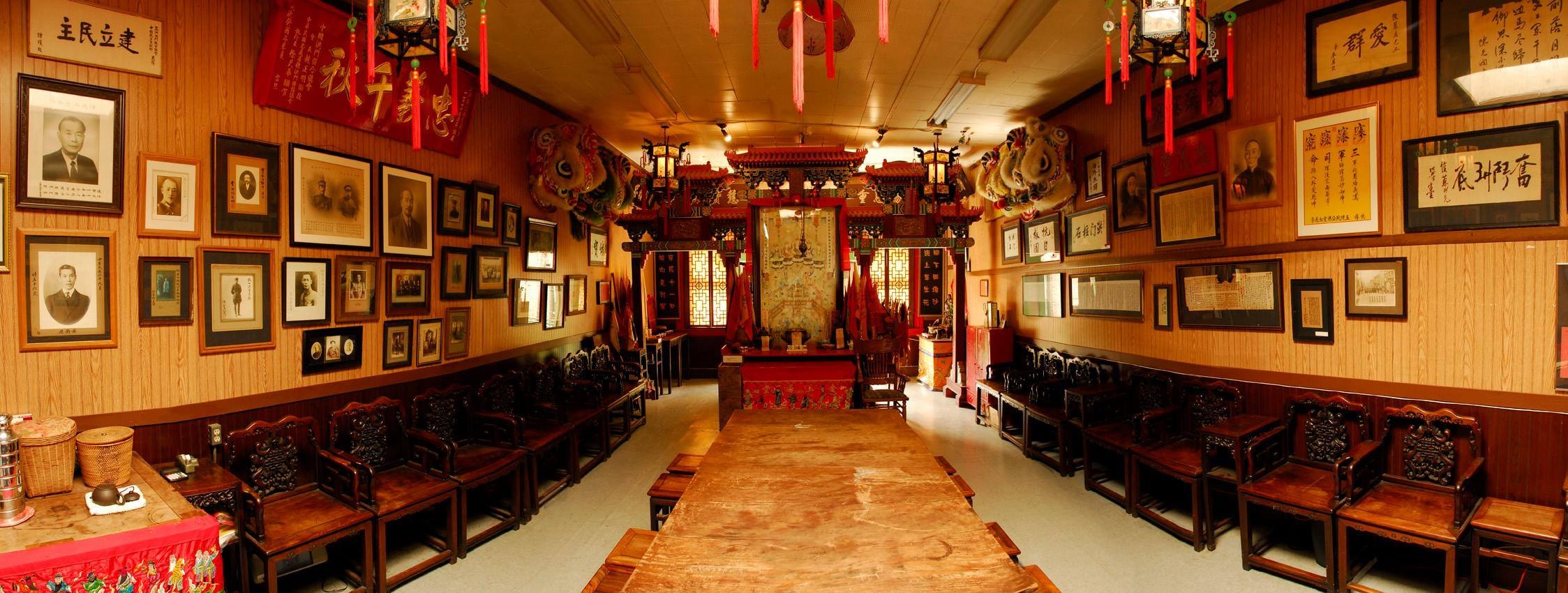
Meeting rooms, lodging and ceremonial spaces made the brotherhood part of everyday immigrant life.
From San Francisco to distant shores, follow the halls, people and records that connect a worldwide tradition of fellowship.
Explore the lodges ↓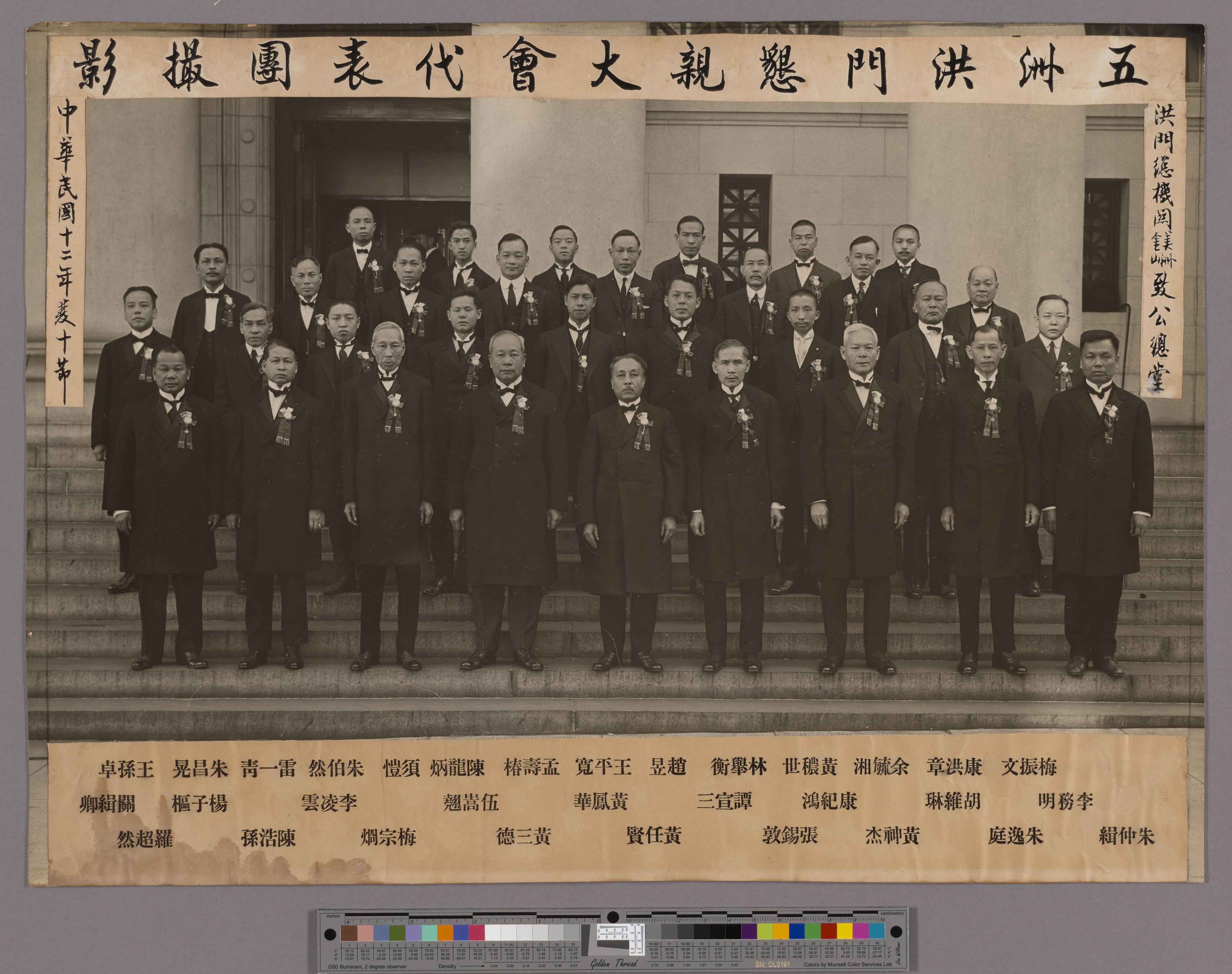
San Francisco became an important center of a network shaped by migration, mutual aid, correspondence and shared traditions. Some lodges were newly established; others grew from earlier societies or later adopted the Chee Kung Tong name. Each has its own story.
Meeting rooms, lodging and ceremonial spaces made the brotherhood part of everyday immigrant life.
Registration books and letters preserve relationships that crossed cities, borders and oceans.
Lodges and youth organizations continue the story through gatherings, cultural activities and community service.
Dates below identify the event the source supports: a founding, a name change, a hall opening or a documented gathering. Historical connections do not automatically establish present-day jurisdiction.
Berkeley’s collection guide traces the organization to 1848 and records its San Francisco registration in 1879. The archive’s membership registers and international correspondence preserve the story of a lodge connected to communities far beyond California.

Boston’s own timeline dates the lodge to 1868, incorporation to 1906, and the purchase of 6 Tyler Street to 1909. Its later Gung Ho youth club began in 1948 and adopted the Hung Ching name in 1954—distinct milestones in a continuing community story.

A 2011 report describes a photograph of Wong Sam Duck introducing Sun Yat-sen to the New York lodge in 1904. Berkeley preserves a letter from New York to San Francisco dated August 14, 1925. These document the connection; they do not establish New York’s founding date. The older lodge at 22 Mott Street is distinct from the athletic club founded in 1956.

An Oregon Historical Quarterly study dates the local organization to 1881 and describes its role in community affairs and dispute settlement. This is Portland, Oregon; the separate Portland, Maine chapter is recorded as incorporated in 1922 in Boston’s timeline.

Parks Canada dates Barkerville’s surviving Chee Kung Tong hall to 1874–77. Its hostel, kitchen, social rooms and ceremonial spaces show how brotherhood supported everyday life. The often-cited 1863 origin remains debated in scholarship. SFU’s history dates Victoria’s Chee Kung Tong to 1876.

SFU gives September 9, 1892 as the founding date. Other histories use 1888, so the date is attributed here. The lodge purchased its building in 1907. A 1939 convention photograph captures the continuing regional network decades later.

A 2026 community report gives 1894 as the founding year; SFU documents the lodge’s presence in the York Street Chinese business district by 1910. The photographed Dundas Street hall represents a later chapter of that history, rather than evidence of the founding itself.
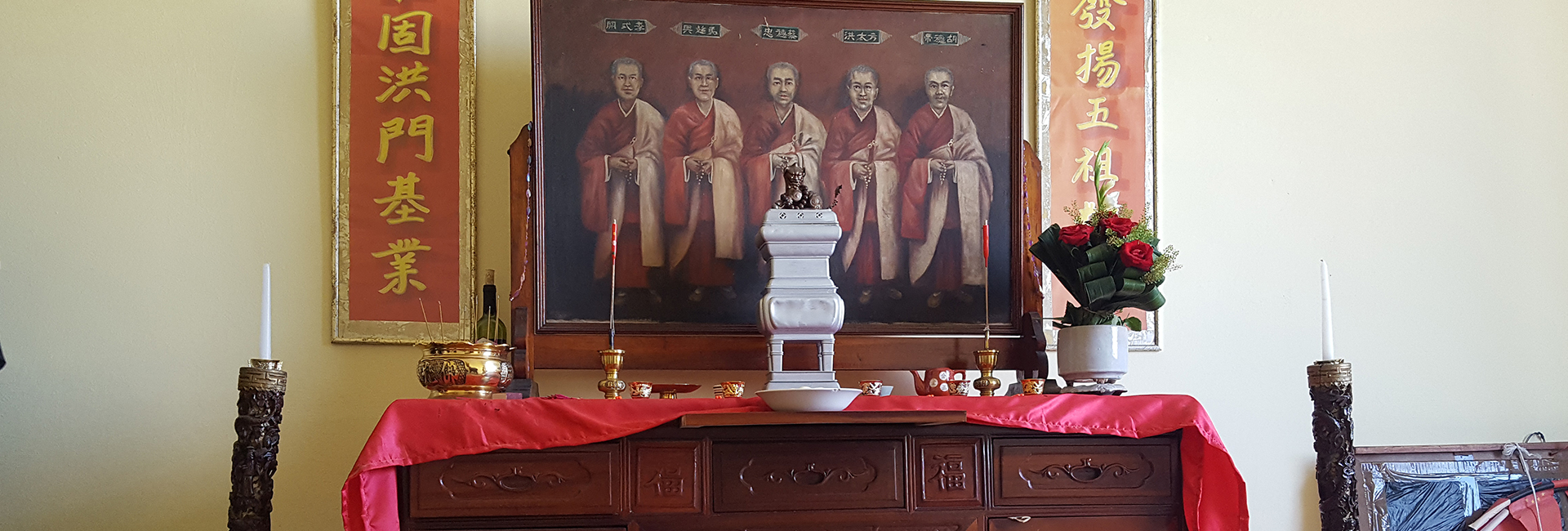
Association researcher Mitzi Espinosa Luis dates the predecessor San He Hui to January 15, 1887, the Hong Men Chee Kung Tong name to January 1902, and Min Chih Tang to 1946. This is a history of institutional continuity through different names, rooted in mutual support and the interests of the Chinese community.

Jamaica’s Chinese Benevolent Association timeline dates Chee Kung Tong to 1887. Boston’s worldwide directory also identifies the Kingston society. The local founding charter and original officers remain subjects for further archival research.

A March 2017 delegation report records attendance at the Dominican Hongmen Chee Kung Tong grand lodge’s 24th founding anniversary. This points to 1993; it is an inference from the anniversary, not a charter date verified here. Local reporting also records the society’s participation in Chinese New Year celebrations.

A 2023 Hongmen historical account gives this opening date and describes four representatives from the Dominican lodge assisting under arrangements by an American grand lodge. The account does not identify that American body clearly enough to assign the action specifically to San Francisco; independent founding records would strengthen the history.

A reproduced La Vanguardia article dates the lodge to late 1915 and the hall opening to March 1916. It explicitly calls it a branch of a San Francisco lodge and describes assistance and mediation for the local Chinese community. This is a particularly direct documentary connection.
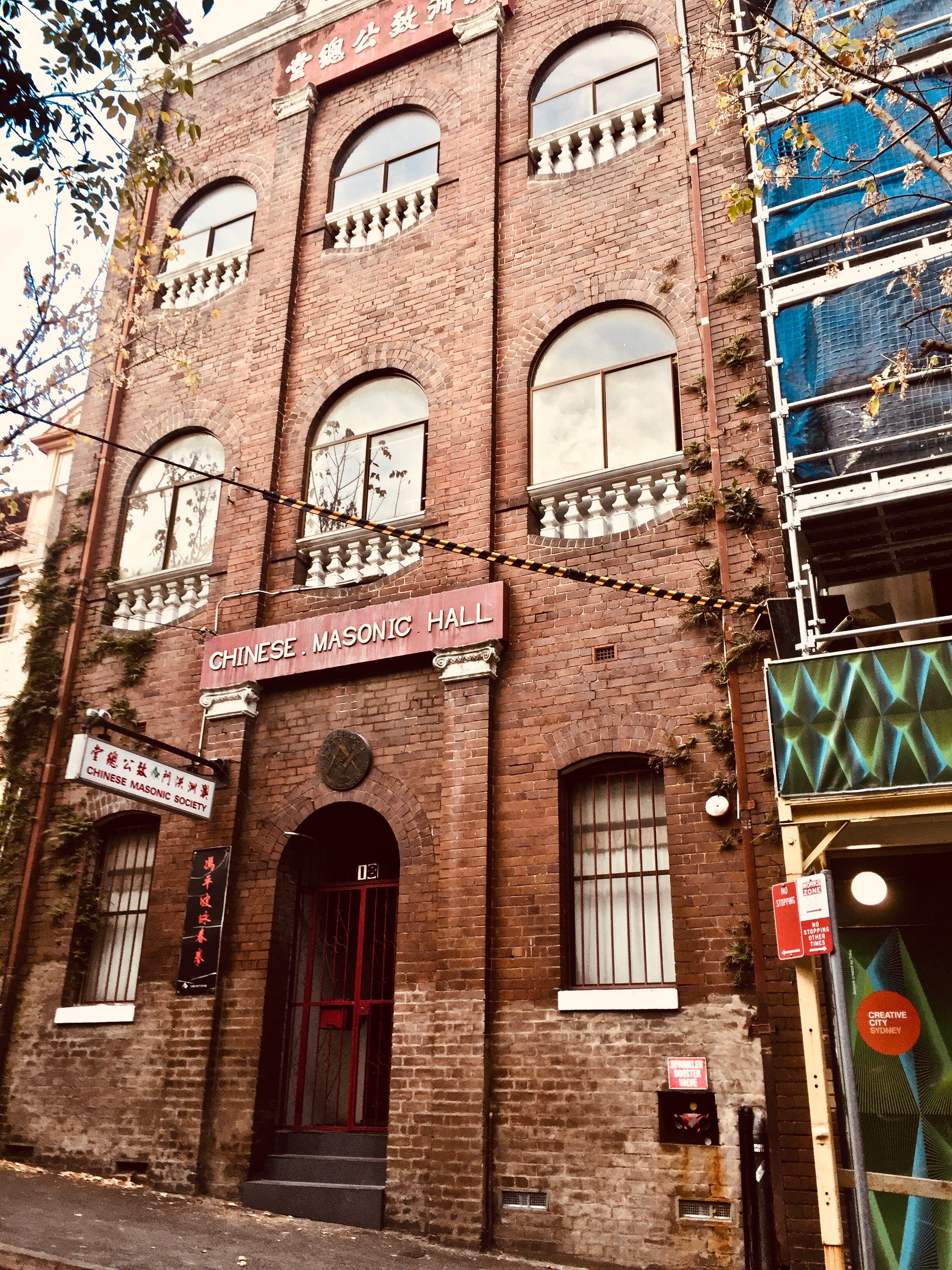
Australian scholarship traces older local brotherhoods and their consolidation under organizers including Moy Sing and James Chuey. Adoption of the Chee Kong Tong name in 1919 followed San Francisco’s example. The naming milestone should not erase the organization’s earlier Australian roots.

Hawaii requires separate histories for Honolulu, Wailuku and Lahaina. Wo Hing’s own histories connect it to plantation-era Chinese migration, but published registration dates differ. In Wailuku, local research records a January 1905 hall dedication. A hall opening is not necessarily an organization’s beginning.

The local community federation gives May 19, 1937 as formation and July 16 as gazette publication; a court record identifies government approval on June 17. These dates describe different steps in establishing the same association. Its later hall was inaugurated in March 1985.
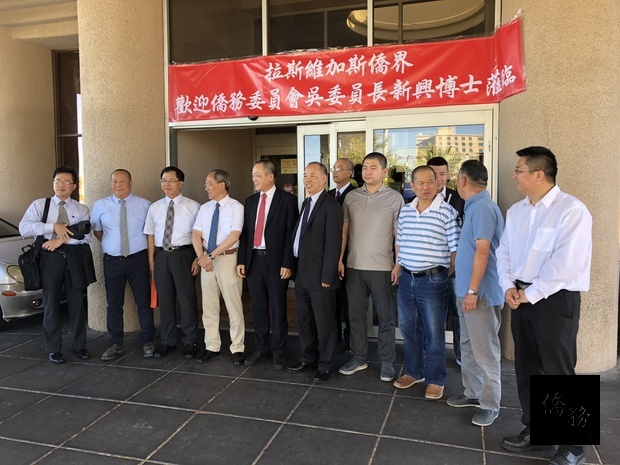
OCAC coverage documents a welcome and gathering at the Las Vegas lodge in 2018. This confirms activity by that date, not its founding year. A 2026 World Journal report also describes Las Vegas participation alongside other cities at New York’s youth-club anniversary.
University of Arizona research documents a Tucson chapter by 1895, when a newspaper described its flag above the hall at 67 Pearl Street. Later records place it at 85 South Main Street. The lodge hosted community celebrations and preserved the practices of mutual support brought by Chinese immigrants. Among its surviving records, researchers describe an edict from the Supreme Lodge, Chinese Freemasons of the World, at 36 Spofford Alley, San Francisco. That document gives this desert community a particularly tangible connection to our headquarters.

San Diego’s history centers on 426–428 Third Avenue. Yee Hing and Company acquired the property in 1883; the present building dates to 1911 and housed the Gee Goon Tong, also recorded as Chee Kung Tong. The building later served the Chinese Benevolent Association and Chinese-language education. San Diego’s 1926 directory still lists the Chinese Free Masons (Chee Kung Tong) at 428 Third Avenue. In San Francisco’s archive at Berkeley, an international address list names the San Diego Chinese Masonic Society, preserving another link between the two California communities.

Boston Chinese Freemasons’ historical timeline records the incorporation of a Chee Kong Tong chapter in Portland, Maine, in 1922. This is a separate community from Portland, Oregon, whose lodge history is also featured here. The entry places another New England city within the recorded Chee Kung Tong network. The incorporation date is a legal milestone; it does not by itself establish the first gathering of members or a founding mission from San Francisco.
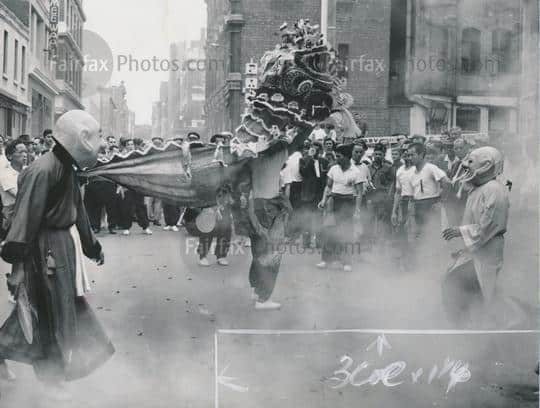
Melbourne’s Chinese Masonic Society traces its roots to the Yee Hing fraternity of the Victorian gold rush, when Chinese newcomers needed fellowship, protection and help finding work. Its own history dates adoption of the Zhigongtang name to 1911. The society’s lion dancers have taken part in Chinatown celebrations since the postwar era, carrying that community tradition into new generations. Berkeley’s San Francisco archive explicitly lists the Melbourne Chinese Masonic Society among the Tong’s overseas contacts. The evidence connects the lodges while preserving Melbourne’s distinct local origins.

A New Zealand community history records a Wellington Yee Hing branch in 1907 and the opening of its headquarters at 23 Frederick Street on October 10, 1925. The account describes its alliance with Australian societies and adoption of the Chee Kung Tong name following direction from the San Francisco headquarters. Its public life included charitable fundraising, music and ceremonial gatherings. The Doris Chung collection at the Alexander Turnbull Library preserves flags, seals, instruments and other objects from the society—an enduring record of the people behind this Pacific connection.

Liverpool’s Chee Kung Tong belonged to the mutual-aid world of Britain’s early Chinese communities. Historical accounts describe assistance with members’ welfare, burials and exploitation; a University of Liverpool study later records its service to older Chinese residents. San Francisco’s surviving address records identify the English lodge as Chinese Free Masons (Liverpool), 英倫致公堂. This is direct archival evidence of an overseas connection. Published accounts differ on its earliest establishment, so a precise founding year is not assigned here.
Boston’s published directory also lists Baltimore, Detroit, Cleveland, Atlanta, Chicago, Washington, D.C., Melbourne and Manila. Berkeley’s lodge-officer register opens further paths into Buffalo, Rotterdam, Perth and many communities across Canada, Mexico, Cuba, Central America and Africa. These records are starting points for individual chapter histories, not a complete count of currently active affiliates.
World Journal reports participants from San Francisco, Boston, Philadelphia and Las Vegas at the October 17 celebration. The 1956 date belongs to the athletic club.
Read the original article ↗A visiting delegation’s report provides a dated anniversary reference for the lodge.
Read the original article ↗A lodge visit describes the 1904 photograph linking Wong Sam Duck, Sun Yat-sen and New York Hongmen.
Read the original article ↗Every profile links to its supporting record or publication. Photographs are captioned for the places and occasions they depict; they are not presented as founding-day photographs. Where an anniversary supplies a probable year, or published histories disagree, the distinction is retained.
Research updated October 18, 2026. This is a growing historical guide; archival catalog entries have not all been transcribed from the original manuscripts.
Explore our San Francisco home and the affiliated-lodge directory.
San Francisco LodgeAffiliated LodgesExplore the Archives